
In our Grow Veggies program, we teach our participants the importance of recordkeeping if they plan on gardening for years to come – which we really hope they do! Keeping a journal of what happened in your garden this year is invaluable to both next year’s garden planning process and in future years when you’re faced with challenges that tend to recur.
While doing this for our Homestead T.O. teaching garden, we thought it would be neat to share with you our reflections on our 2023 growing season. Like every growing season before, our latest year in the garden was a mixture of challenges and accomplishments. There has never been a year of complete success or failure – it’s always a mixture of both, and the key to gardening is to recognize each one early and react accordingly.
Weather Impact
When speaking with a farmer, the subject matter always turns to the weather. This year, the weather conditions were more challenging compared to last year:
- The frost warnings in the final week of May delayed all our hot crop plantings, with many of our peppers and beans being delayed until early June.
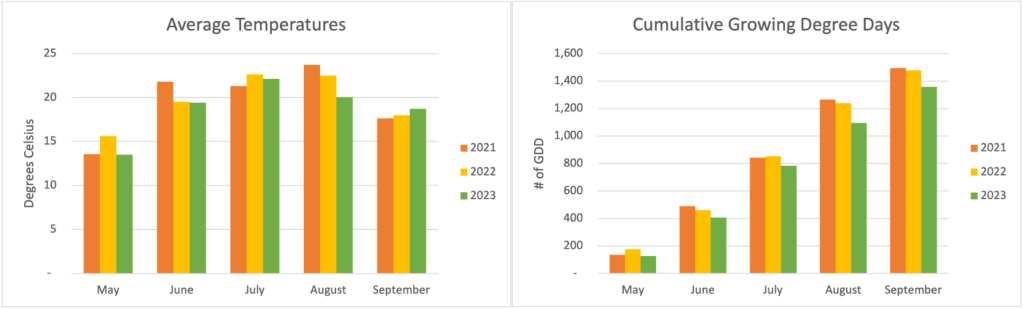
- This trend continued throughout the season, with the average May to September temperature being 1°C cooler than last year, which slowed down crop growth.
- On the other hand, rainfall was much greater in the early growing season (and much lower in late summer), which changed our usual irrigation patterns and led to challenges with powdery mildew.
- Most telling of all, we had fewer growing degree days (GDD) in 2023 compared to 2022 in every month until September, leading to delayed harvests of hot crops. In fact, this was the first year ever when we didn’t have any significant tomato harvests until August. For those unfamiliar with growing degree days, this is an important concept that explains the success and timing of most crops.
Pests and Diseases
Our 2023 growing season saw cabbage aphids, cabbage moths, flea beetles, beet leaf miners, pepper flies, potato beetles, powdery mildew, and bacterial speck. Most of these were predictable and manageable through row cover, diatomaceous earth, mulch, and a keen eye – although the aphids got the best of our kale and cabbage late in the season.
Garden Inputs
One of our key goals is to be more sustainable each year. Our external inputs have been minimized in general, and our final area of focus is our external compost. We created a compost area in the plot this year, so we limited our purchase of externally-made compost. This made things a bit more challenging as we struggled with soil texture while our compost matured, but we’re hoping a concerted effort to produce as much compost as possible on the plot will benefit the garden for years to come.
Setting Up for Next Year
At the end of the season, we invested a lot of time raising up the garden beds to improve the soil for next year, making the garden less susceptible to pests and weather challenges. Better soil leads to healthier plants. We built up the beds using a mixture of compost, other organic matter, cardboard, and additional soil from digging up the paths to increase organic matter and air pockets in the soil for next year’s plants.
Biggest Wins
Despite the challenges, we had some big successes this year. Our most successful crops included garlic, onions, beets, radish, fennel, zucchini, and tomatillos. For the most part, these tended to be the less temperature-centric crops, so they do well in both hot and cool temperatures.
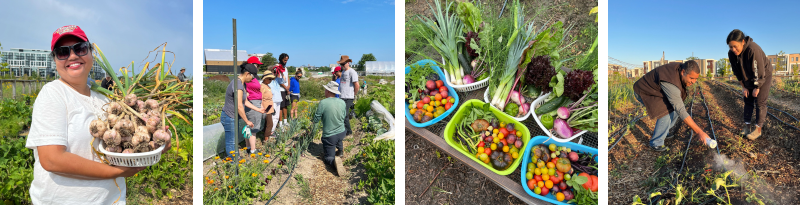
Of course, as a teaching garden, our greatest success is with our students. We were energized by the enthusiasm for learning and the sense of joy and fun they brought to each class. We loved the friendships that were made, the recipes that were shared, and the sense of excitement that was felt when the harvest was brought home to be enjoyed by their family and friends.
Scroll to the bottom of our Grow Veggies page to read what our students said they got most out of the teaching garden, and read our article in the 2024 West Coast Seeds Gardening Guide about how growing food helps build community for our Grow Veggies participants. And if you missed our short Grow Veggies Year in Review video, check it out below – lots of harvest and smiling faces!
Looking Forward
We are incredibly excited about next year’s Grow Veggies program, we can’t wait to see our graduates growing in the community and at a larger scale (including our seven new Growing Urban Farmers participants), and we look forward to seeing what the 2024 growing season brings.
It’s not too late to join us for the 2024 growing season. As of the time of writing, there are still a few spots left in our in-person Grow Veggies program, or you can sign up for our online program to learn from home. Visit our program page to learn more!
 Homestead T.O.