
Summer squash, including zucchini, pattypan, and crookneck, are incredibly prolific. These plants can get quite large but are among the most productive vegetables in any garden, if well-maintained.
Planting
- Timing: Squash is a hot crop. Wait until nighttime temperatures are forecasted to be safely above 12°C, usually three weeks after the last frost date.
- Method: It is easiest to direct-seed into the garden. If starting indoors, do so no earlier than three weeks before the last frost and transplant very carefully to avoid disturbing the roots.
- Location: Select the sunniest, hottest spot in your garden with plenty of room to vine out. Since squash are susceptible to powdery mildew, locate the plants in an elevated space (raised bed or atop a slope).
- Spacing and Depth: Plant seeds 3/4″ deep and space them 18–24″ apart in well-drained soil enriched with compost.
Maintenance
- Feeding: These are heavy feeders. Use nitrogen and phosphorus early on, then switch to phosphorus, potassium, calcium, and magnesium once they fruit. Top-dress with compost midway through the season.
- Pollination: Squash requires insect pollinators. Plant native wildflowers nearby. If fruit shrivels and drops, manually pollinate every 2–3 days using a small paintbrush or cotton swab.
Pests and Diseases
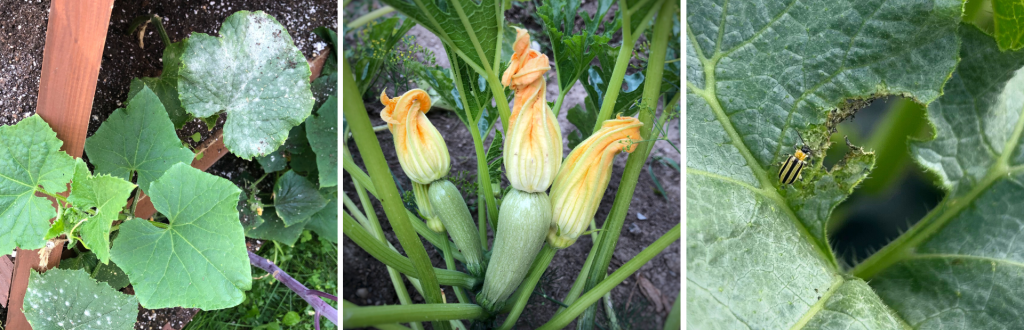
- Early Pests: Watch for cucumber beetles (photo on the right), squash bugs, and aphids in the earlier stages of plant growth. Use fine-mesh row covers or diatomaceous earth to protect young plants.
- Vine Borers: Active in early summer; vine borers are moths whose larvae can kill the plant by eating into the vines. Protect the base of the plant by wrapping the bottom 6″ of the vine in a stem collar or tin foil.
- Late Stage: Broad leaves are prone to powdery mildew (photo on the left). Always water the soil, not the foliage, and use a baking soda solution if white spots appear.
Harvesting
- Frequency: Harvest often to encourage the plant to keep producing.
- Selection: Size is everything. Zucchini is best when it is 8″ long; larger fruit will have a diluted flavor. Leave a small bit of the stem attached to the fruit.
- Storage: Keep in a cool area or the refrigerator (away from the very back) for up to 2 weeks.
💡 Tips for Toronto Gardeners 💡
If you have a very small space, you can “wrangle” summer squash to grow vertically up a sturdy trellis or fence. This saves massive amounts of ground space and helps prevent powdery mildew by increasing airflow around the leaves.
Ready to Grow More?
Join our community of gardeners and start growing your own food in the city! From balcony boxes to backyard plots, community gardens, and urban farms, we’re dedicated to helping you succeed in vegetable gardening and urban agriculture.
- In the Greater Toronto Area (GTA)? Join Our Program at Downsview Park: Enroll in our full-season Grow Veggies program for hands-on learning and a share of the harvest.
- Get Monthly Tips: Sign up for our monthly Grow With Us newsletter to receive seasonal tips and our gardeners’ to-do lists.
- Follow Us: Find us on Instagram or Facebook to see what we’re growing at our teaching garden in Toronto.
 Homestead T.O.