
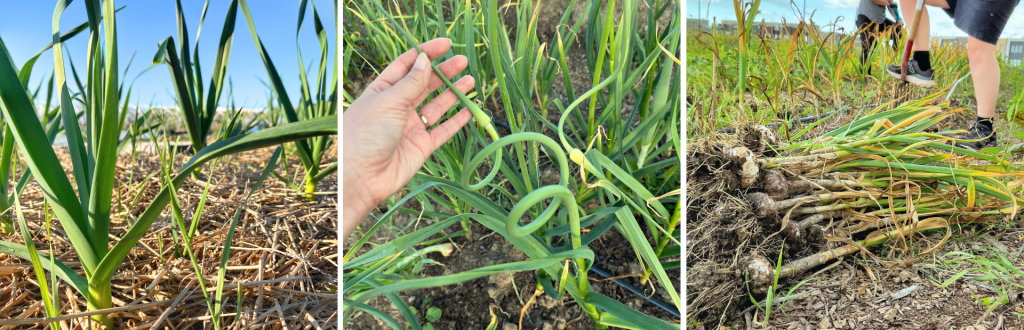
Garlic is a hardy and rewarding crop for any urban garden. It is considered one of the easiest vegetables to grow. While technically a biennial, it is typically grown as an annual in our climate by planting full cloves (rather than seeds, referred to as bulbils) in the fall and harvesting in July or August of the first full growing season. Garlic belongs to the allium family and, as such, serves as a natural pest deterrent in the garden.
Planting
- Method: Garlic is direct-seeded outdoors.
- Varieties: Softneck garlic varieties often have larger bulbs while hardneck varieties provide two harvests: scapes in early-July and bulbs in early-August.
- Timing: Garlic must be planted in the autumn. This allows the cloves to undergo vernalization (a period of freezing that leads to larger bulbs) before they can germinate and grow in the spring.
- Location and Sun: Choose a spot with full sun. It can also tolerate partial sun, though the bulbs size up more in full sun.
- Soil Preparation: Garlic is a medium feeder. It must be planted in heavily composted soil. The soil should be slightly-acidic-to-neutral and loose.
- Spacing and Depth: Plant cloves 6″ apart and 6” deep. The cloves should have the pointed side facing upward when planted.
- Mulching: Adding straw mulch in the fall can help stabilize soil temperatures over the winter and reduce the freezing and thawing cycle during warmer periods of the winter.
Maintenance
- Watering: Consistent moisture is important as the plant grows in its early stages, but reducing irrigation as the bulbs reach full size will concentrate the flavor.
- Feeding: Because garlic is planted in the fall, add a generous amount of organic matter or compost to the bed at planting time to refresh the soil for the next season.
- Companion Benefits: Garlic is an excellent neighbor for many crops. It helps deter carrot rust flies and is a beneficial companion for tomatoes.
- Mulching: Moving mulch away from the garlic once all risk of frost has passed will warm the soil faster and speed up germination and early growth. The mulch can be placed back atop the soil once the garlic has established in order to maintain moisture and suppress weeds.
Pests and Diseases
- Common Pests: Garlic is generally resistant to many pests and actually helps repel aphids and rodents from nearby susceptible vegetables.
- Management: While hardy, you should still monitor for nematodes or root rot, which are common issues for allium family crops.
- Disease Prevention: Rotate your crops to ensure that alliums are not planted in the same spot more than once every 3 to 4 years.
Harvesting
- Timing: Garlic scapes (the flower stalks that emerge in June, middle photo above) are ready to harvest as soon as the tops have looped – no more than twice! Garlic bulbs are ready for harvest once the bottom four leaves of the plant have fully died back.
- Curing: After harvesting, gently brush off the dirt and let the bulbs sit in a dry, airy, and sunny space for 4 weeks. This curing process thickens the skins and makes them suitable for long-term storage.
- Storage: Once cured, store garlic in a dark, cool (but not cold) space.
💡 Tips for Toronto Gardeners 💡
In Toronto, the best time to plant your garlic is typically late October or early November, once the soil has cooled but before the ground freezes solid. This gives the cloves just enough time to establish roots before going dormant. If straw mulch is not available, cover the newly planted cloves with a layer of dried leaves and then hold the leaves down with chicken wire or row cover as they may blow away.
Ready to Grow More?
Join our community of gardeners and start growing your own food in the city! From balcony boxes to backyard plots, community gardens, and urban farms, we’re dedicated to helping you succeed in vegetable gardening and urban agriculture.
- In the Greater Toronto Area (GTA)? Join Our Program at Downsview Park: Enroll in our full-season Grow Veggies program for hands-on learning and a share of the harvest.
- Get Monthly Tips: Sign up for our monthly Grow With Us newsletter to receive seasonal tips and our gardeners’ to-do lists.
- Follow Us: Find us on Instagram or Facebook to see what we’re growing at our teaching garden in Toronto.
 Homestead T.O.