
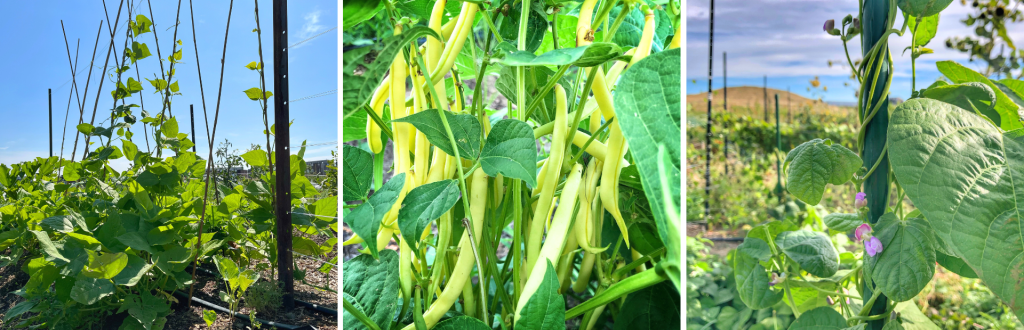
Beans are a fantastic staple for any garden. They are relatively fast-growing, with some varieties ready for harvest in as little as 50 days. Because they grow quickly, they are among the most productive vegetables if you harvest them often.
Beans come in two main growth forms:
- Bush Beans: Grow 12-18″ tall and do not require support.
- Pole Beans: Climbing vines that reach 6-8′ tall and require a trellis.
There are also three different harvest types to choose from:
- Snap beans: Eat the entire pod.
- Shelling beans: Open the pods to eat the seeds inside.
- Dry beans: Let the pods dry on the plant, then harvest seeds for storage.
Planting
- Location: Choose a spot with full sun (aim for 8 hours, though 6 is the minimum). Ensure the soil has good drainage, as bean roots hate standing water. Hill the soil (or plant in containers) if necessary to improve drainage. Avoid planting beans within 12” of onions or garlic.
- Timing: Beans are a hot crop. Plant outdoors only after all risk of frost has passed. Wait until the soil temperature is at least 15°C and overnight air temperatures stay above 10°C.
- Method: Always direct-seed beans into your garden. They have delicate roots and do not transplant well.
- Spacing: Plant seeds approximately ½” deep.
- Bush beans: Space seeds 4-6″ apart.
- Pole beans: Space seeds 6-8″ apart.
- Succession Planting: When planting a lot of beans, consider planting them in waves every two weeks to spread out your harvest.
- Watering: Water immediately after planting and keep the soil damp for the first 7-10 days to stimulate germination.
Maintenance
- Watering: Keep the soil moist but never soaking wet. Use low-volume watering or mulch to retain moisture.
- Fertilizing: Beans are light feeders and do not require much fertilization. They attract symbiotic bacteria that convert nitrogen from the air into a usable form, so avoid high-nitrogen fertilizers. They do, however, love soil that is high in organic matter. As plants mature, a “bloom formula” fertilizer (high in phosphorus and potassium) can improve your harvest.
- Trellising: If growing pole beans, provide a trellis, fence, or conical stakes for them to climb. Aim for a height of 6-8′ to maximize growth while keeping the harvest within reach.
Pests and Diseases
- Rodents: Rabbits, mice, and voles love young seedlings for the first 2-3 weeks after germination. Protect new plants with slightly buried fencing or row cover until they are established.
- Insects: Watch for Mexican bean beetles and Japanese beetles in early summer. Planting in mid-May can help avoid their peak season. Use diatomaceous earth or nematodes if infestations occur.
- Disease Prevention:
- Root Rot & Clubroot: Plant in well-draining soil and rotate your crops (avoid planting where legumes or brassicas grew recently). If clubroot is an issue, add lime to bring soil pH closer to 7.0.
- Blight & Mildew: Plant early to avoid the mid-July blight season. Avoid planting too densely and orient rows to maximize airflow.
Harvesting
- Timing: Bush beans generally begin producing in 50-60 days; pole beans take 60-70 days.
- Frequency: Harvest at least 2-3 times per week once production starts. This is crucial, as frequent harvesting prevents oxidized beans and stimulates the plant to produce more beans.
- Technique: Harvest each bean when it reaches your preferred size.
💡 Tips for Toronto Gardeners 💡
While this guide mentions planting when air temperatures stay above 10°C, in Toronto, this usually aligns with the “May 2-4” long weekend. Beans really dislike cold soil, so if our spring is particularly wet and cool, don’t rush! Waiting until the first week of June often results in faster germination and stronger plants that catch up quickly.
Ready to Grow More?
Join our community of gardeners and start growing your own food in the city! From balcony boxes to backyard plots, community gardens, and urban farms, we’re dedicated to helping you succeed in vegetable gardening and urban agriculture.
- In the Greater Toronto Area (GTA)? Join Our Program at Downsview Park: Enroll in our full-season Grow Veggies program for hands-on learning and a share of the harvest.
- Get Monthly Tips: Sign up for our monthly Grow With Us newsletter to receive seasonal tips and our gardeners’ to-do lists.
- Follow Us: Find us on Instagram or Facebook to see what we’re growing at our teaching garden in Toronto.
 Homestead T.O.