
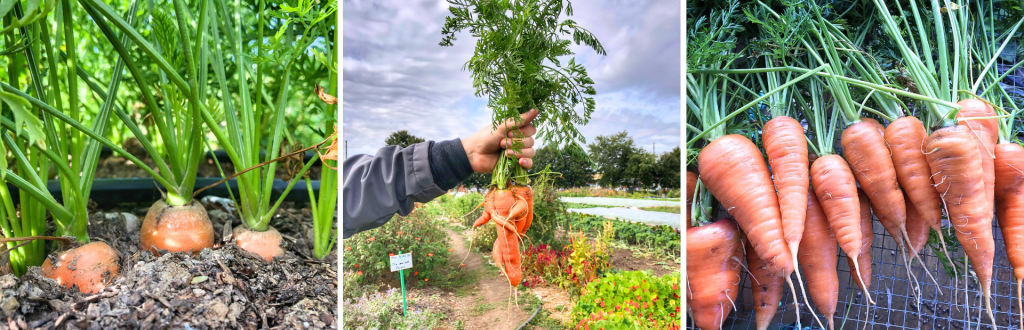
Carrots are among the easiest vegetables to grow because they withstand a wide range of temperatures, from light spring frosts to summer heat. They are relatively fast-growing, and since all parts of the plant (including the greens) are edible, they are one of the most efficient crops for a small garden.
Common varieties include:
- Chantenay: Shorter and wider; ideal for heavy clay soils or shallow containers.
- Nantes: Fast-growing and frost-hardy; excellent for late-season harvests.
- Danvers: The classic wedge-shaped carrot with a pointed tip.
- Imperator: The longest, narrowest, and sweetest variety; most commonly grown by home gardeners in loose or sandy soil.
Planting
- Method: Always direct-seed carrots. They have delicate taproots that do not transplant well.
- Sunlight: Choose a mostly sunny spot. While they can grow in partial shade, full sun produces much larger taproots.
- Soil Preparation: For the straightest carrots, cultivate your soil to a depth of 10–12″. Remove any rocks, sticks and large clumps (aggregates), as these can cause roots to become forked or deformed.
- Nutrients: Carrots are medium feeders. Mix 1″ of compost into the garden soil before you plant.
- Timing: You can start planting as early as three weeks before the last frost date. Cold soil leads to slow germination, but it provides an early start to the season.
- Spacing and Depth: Plant seeds with 1-2″ spacing in rows at least 12″ apart.
- Germination Tip: Carrot seeds are immature and delicate. Keep the topsoil consistently damp for the first few weeks. Draping burlap or row cover over the seeds helps retain moisture and protects them from cold air. Remove the cover once the seeds germinate.
Maintenance
- Watering: Water regularly to keep the soil slightly damp. Avoid waterlogged soil, which can lead to root rot.
- Fertilizing: Roughly 30–40 days after planting, add a small amount of phosphorus-rich fertilizer to encourage root enlargement.
- Hilling: If you are growing Nantes carrots, mound a little soil over the “shoulders” (the top of the root) if they peek out of the ground to prevent them from turning green.
Pests and Diseases
- Insects: Protect against carrot rust fly by using row covers and rotating your crops annually. To avoid nematodes, plant in early spring so you can harvest before they become active in the heat.
- Disease: Prevent root rot by ensuring your soil is well-draining and practicing crop rotation.
- Animals: Rabbits love carrot leaves, while mice and voles target the mature roots. Prevent damage by placing a cage over the bed or hiding carrots behind a row of onions, which these animals typically avoid.
Harvesting
- Timing: Harvest when the “shoulders” (the visible top of the root) reach your desired size.
- Variety Specifics: Harvest Chantenay carrots promptly before they become woody. Nantes carrots can be left in the ground during the fall as a form of “outdoor storage” if no pests are present.
- Technique: Pull the carrots and remove the greens immediately to prevent the roots from softening.
- Storage: Store the roots in a cool, damp place for up to two weeks.
💡 Tips for Toronto Gardeners 💡
Because Toronto’s spring can be quite wet, it is easy for the soil to become compacted. If you have heavy clay soil common in many GTA backyards, I recommend choosing the Chantenay variety. Its shorter, wider shape allows it to push through our tough soil much more effectively than the long, narrow Imperator varieties.
Ready to Grow More?
Join our community of gardeners and start growing your own food in the city! From balcony boxes to backyard plots, community gardens, and urban farms, we’re dedicated to helping you succeed in vegetable gardening and urban agriculture.
- In the Greater Toronto Area (GTA)? Join Our Program at Downsview Park: Enroll in our full-season Grow Veggies program for hands-on learning and a share of the harvest.
- Get Monthly Tips: Sign up for our monthly Grow With Us newsletter to receive seasonal tips and our gardeners’ to-do lists.
- Follow Us: Find us on Instagram or Facebook to see what we’re growing at our teaching garden in Toronto.
 Homestead T.O.