
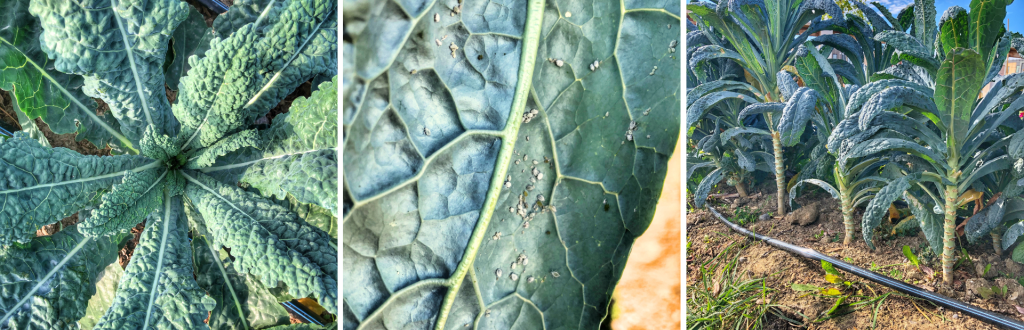
Kale is one of the easiest and most productive vegetables for any home garden. As a member of the brassica family (alongside broccoli, cabbage, and Brussels sprouts) it is incredibly nutrient-dense. Kale is also remarkably hardy, withstanding both heat and cold. While it grows throughout the season, the flavor often improves after a cool autumn frost. Common varieties include Lacinato (also known as Dino or Black kale), Curly, and Red Russian.
Planting
- Method: While kale can be direct-seeded, we recommend starting seeds indoors in early spring to maximize your harvest throughout the year.
- Indoor Starting: Use high-quality seed starter in 1″ cell trays. Bury seeds 1–2mm deep and press firmly to remove air pockets. Maintain a soil temperature slightly above room temperature for best germination.
- Transplanting: Seedlings are typically ready to move outdoors after six weeks, once they have at least six true leaves and once the soil has thawed. In Toronto and similar climates, this is usually mid-April.
- Location and Soil: Choose a spot with well-drained, fertile soil. While kale handles sun, a location with protection from intense late-day heat, such as a site with eastern or southeastern sunlight exposure, is ideal.
- Spacing: Mix nitrogen-heavy compost into the soil before planting. Space seedlings 12″ apart within rows, with 24″ between rows to allow leaves to size up.
- Depth: Bury stems approximately ¼” deeper than they were in the tray to encourage strong roots. Do not bury deeper than ½” to avoid stem rot.
Maintenance
- Feeding: As heavy feeders, kale plants thrive with regular fertilization. Use nitrogen-rich compost or organic fertilizer to promote lush foliage. Alternatively, plant kale in sections where nitrogen-fixing legumes were grown previously. Adding calcium to the soil can help produce crisper leaves.
- Watering: Water regularly, especially during hot, sunny periods. Ensure the soil remains moist but never water-logged, as oversaturation invites soil-borne diseases.
- Protection: Use a fine-mesh row cover from the day of planting to block pests. You can remove the cover once you begin harvesting if the plants are robust and pest pressure is low.
Pests and Diseases
- Common Pests: Be on the lookout for aphids, cabbage worms, flea beetles, slugs, and snails. While mature plants are resilient, these pests can damage the appearance and yield of your crop.
- Management: In addition to row covers, you can dust leaves with diatomaceous earth to deter flying insects or apply it in a circle around the base of the stems to deter crawling insects.
- Disease Prevention: To avoid black rot and clubroot, rotate your crops so that brassicas are not grown in the same spot for more than three to four years. If these issues persist, consider adding lime to raise the soil pH to 7.0.
Harvesting
- Technique: Harvest frequently once leaves reach your preferred size. Use pruners to cut full-sized leaves at the stem, or simply twist them off by hand.
- Sustainability: To keep the plant productive, never harvest more than one-quarter of the total foliage at one time.
- Storage: Loosely wrap harvested leaves in plastic and store them in the refrigerator, where they will stay fresh for up to three weeks.
💡 Tips for Toronto Gardeners 💡
Kale is one of the few vegetables that can truly handle a Toronto winter. If you leave your plants in the ground and cover them with a simple frost blanket or heavy mulch in late November, you can often keep harvesting fresh greens right through the first few snowfalls. The leaves get remarkably sweet after the first few hard freezes.
Ready to Grow More?
Join our community of gardeners and start growing your own food in the city! From balcony boxes to backyard plots, community gardens, and urban farms, we’re dedicated to helping you succeed in vegetable gardening and urban agriculture.
- In the Greater Toronto Area (GTA)? Join Our Program at Downsview Park: Enroll in our full-season Grow Veggies program for hands-on learning and a share of the harvest.
- Get Monthly Tips: Sign up for our monthly Grow With Us newsletter to receive seasonal tips and our gardeners’ to-do lists.
- Follow Us: Find us on Instagram or Facebook to see what we’re growing at our teaching garden in Toronto.
 Homestead T.O.