
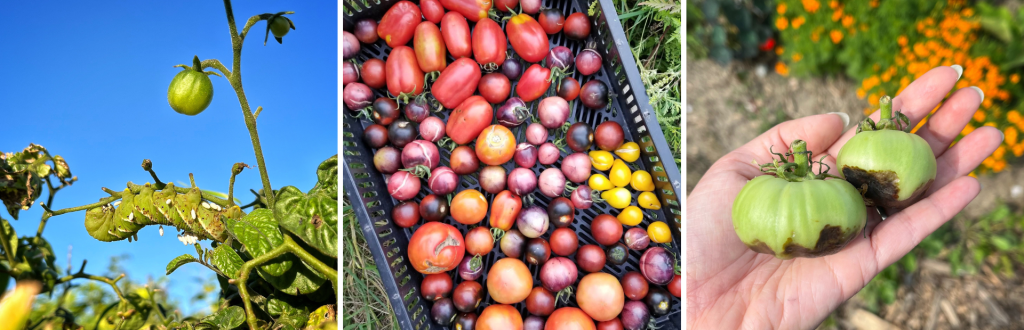
Tomatoes are a favourite for any home garden, offering dozens of varieties of fruits in many shapes and sizes. They are reliable producers that can be eaten fresh or preserved. Most varieties begin producing fruit 2–3 months after being planted outdoors and can continue to produce for up to two months.
There are two main growth types:
- Determinate: Smaller plants with shorter lifecycles that grow in a more compact form and produce one large harvest. These are ideal for containers.
- Indeterminate: Larger, vining plants that produce fruit regularly over a 1–2 month period. These are ideal for in-ground gardens where they can be staked.
Planting
- Starting Indoors: Start seeds indoors about six weeks before their projected outdoor transplant date. Use deep containers (1¼” cell size) to avoid early repotting.
- Transplanting: Move outdoors 2–3 weeks after the last frost date, once all forecasted overnight lows exceed 10°C. Be sure to “harden off” the seedlings for at least a week prior to transplanting to get them used to direct sunlight and wind.
- Location: Choose a spot with full sun, ideally on a slightly mounded bed to reduce morning dew, which can contribute to powdery mildew in August.
- Method: Blend 2–3″ of compost into the soil before planting. Plant seedlings deeply. You can bury part of the stem (after removing lower leaves) to encourage extra roots and a hardier plant.
- Spacing: Space small varieties 12″ apart and large varieties 18″ apart.
Maintenance
- Feeding: Use nitrogen and phosphorus early on, then switch to phosphorus, potassium, calcium, and magnesium once flowering starts. Avoid adding nitrogen late in the season, as it encourages leaves over fruit.
- Watering: Increase water once fruit appears, but reduce it in late August to concentrate flavor and prevent late blight.
- Support & Pruning: Once plants exceed 18″ in height, use cages or trellises to keep them upright. Prune “suckers” (the new stems that grow in the “V” between the main stem and leaves) of indeterminate varieties to focus the plant’s energy on fruit production.
Pests and Diseases
- Insects: Watch for aphids, hornworms (photo on the left, above), and potato beetles. Use diatomaceous earth or neem oil to reduce or prevent damage.
- Blight & Mildew: Common in late stages; always water the soil directly and never the leaves. Use a baking soda solution applied directly to the leaves to delay the spread if symptoms appear.
- Blossom-End Rot: Caused by calcium deficiency. If the bottom of the fruit turns brown, apply a calcium foliar spray directly to the leaves and ensure consistent watering of the plant. See photo on the right for an example.
Harvesting
- Timing: Harvest regularly to keep the plant productive. Pick fruits when the blossom-end (bottom) begins to soften.
- Storage: Store tomatoes at room temperature. Only move them to the fridge if they are over-ripening; if you do refrigerate them, let them return to room temperature before eating to regain most of their flavor.
💡 Tips for Toronto Gardeners 💡
The August humidity is the perfect breeding ground for tomato blight and powdery mildew. To help your plants, prune the lower 12 inches of tomato leaves once the plant is established. This allows for more airflow and prevents soil-borne spores from splashing up onto the leaves during a summer rainstorm. Also, if there are no short companion plants beneath the tomatoes, spread wood chips atop the soil once the tomatoes begin to flower. This will reduce the potential splash-up of fungal spores from the soil. Note that the wood chips will also reduce nitrogen uptake in the short-term but the plant will not need as much nitrogen after flowering has begun.
Ready to Grow More?
Join our community of gardeners and start growing your own food in the city! From balcony boxes to backyard plots, community gardens, and urban farms, we’re dedicated to helping you succeed in vegetable gardening and urban agriculture.
- In the Greater Toronto Area (GTA)? Join Our Program at Downsview Park: Enroll in our full-season Grow Veggies program for hands-on learning and a share of the harvest.
- Get Monthly Tips: Sign up for our monthly Grow With Us newsletter to receive seasonal tips and our gardeners’ to-do lists.
- Follow Us: Find us on Instagram or Facebook to see what we’re growing at our teaching garden in Toronto.
 Homestead T.O.