
Watermelons are rewarding, heat-loving plants that produce sweet fruit during the peak of summer. They are classified as hot crops, meaning they originated in warmer parts of the world and require sustained high temperatures to thrive. Because they have a long growing cycle, often requiring 77 to 98 days to reach harvest, they are best suited for gardeners with sunny spaces and a bit of patience.
Planting
- Timing: Watermelons are “tender plants” and cannot survive any risk of frost. Plant them outdoors only when nighttime lows are consistently above 12°C, typically 3 to 4 weeks after the last frost date.
- Method: While they can be started indoors to shorten their outdoor maturity cycle, they are sensitive to root disturbance. If starting indoors, do so in early April and transplant very carefully. Most gardeners find it easiest to direct-seed them once the soil is warm.
- Location and Sun: Select the sunniest spot in your garden, as watermelons require full sun to produce sweet fruit.
- Soil Preparation: These are heavy feeders that prefer fertile, well-draining soil. Incorporate plenty of compost before planting to provide a rich base of organic matter.
- Spacing and Depth: Plant seeds approximately ¾” deep. Space plants 24″ apart to allow their extensive vines room to spread.
Maintenance
- Feeding: Focus on nitrogen and phosphorus during the early growth stage to build a strong plant. As the plant matures and begins to flower, switch to a “bloom formula” fertilizer high in phosphorus, potassium, magnesium, and calcium to encourage fruit development.
- Watering: Maintain consistent moisture, increasing water levels once the plant begins to set fruit. On days exceeding 30°C, ensure the plants are well-watered to help them cool themselves through transpiration. Always water the soil and not the leaves in order to reduce the effects of powdery mildew. Use mulch around the base to retain soil moisture and stabilize temperatures.
- Pollination: Watermelons rely on insect pollinators to move pollen from male to female flowers. Plant native wildflowers nearby to attract native bees, wasps, and hoverflies. If fruit is not forming, you can manually pollinate by dabbing an anther from a male flower onto the stigma of a female flower (identifiable by the tiny fruit at its base).
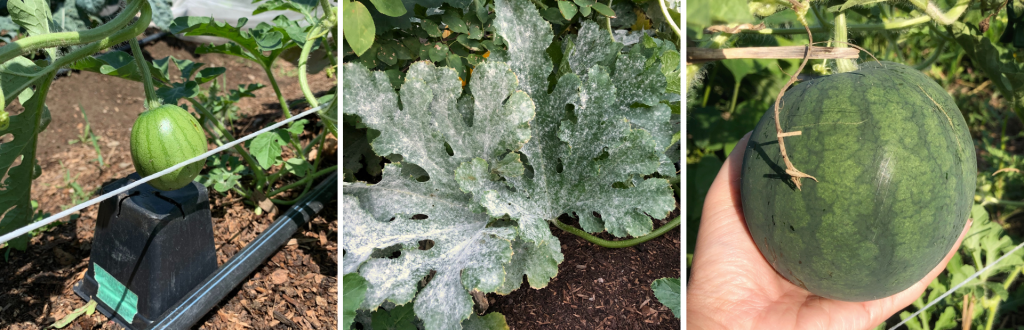
- Support: If growing vines vertically to save space, prop up the fruit (photo on the left) or provide a “hammock” (such as a mesh bag or nylons) to support the weight of the heavy fruit and prevent it from snapping the vine.
Pests and Diseases
- Common Pests: Watch for aphids, cucumber beetles, and squash bugs during the early growth stages. Use fine-mesh row covers to protect young plants, but remove them once flowering begins to allow for pollination.
- Disease Prevention: Broad leaves are susceptible to powdery mildew in late summer when humidity is high (middle photo above). Avoid watering the foliage directly; instead, water at the soil level in the morning to allow the area to dry during the day.
- Blossom-End Rot: A calcium deficiency can cause the bottom of the fruit to rot. Ensure consistent watering and add calcium to the soil if symptoms appear.
Harvesting
- Timing: Watermelons do not continue to ripen significantly after being picked, so timing is critical. The most reliable indicator of ripeness is the tendril opposite the fruit; harvest approximately 2–3 days after this tendril shrivels and turns brown.
- Other Signs: You may also notice the skin colour becomes more matte and the spot where the fruit rests on the ground turns from white to creamy yellow.
- Storage: Most harvested vegetables should be stored in the fridge to slow their metabolism, though watermelon is best enjoyed fresh soon after picking.
💡 Tips for Toronto Gardeners 💡
Because watermelons need a long, hot season to develop their sugar, Toronto’s short summers can be a challenge. I recommend choosing “short-season” varieties and using a dark tarp or black plastic mulch atop your soil starting in mid-May. This helps the soil warm up faster, giving your heat-loving watermelons a head start before they even go into the ground.
Ready to Grow More?
Join our community of gardeners and start growing your own food in the city! From balcony boxes to backyard plots, community gardens, and urban farms, we’re dedicated to helping you succeed in vegetable gardening and urban agriculture.
- In the Greater Toronto Area (GTA)? Join Our Program at Downsview Park: Enroll in our full-season Grow Veggies program for hands-on learning and a share of the harvest.
- Get Monthly Tips: Sign up for our monthly Grow With Us newsletter to receive seasonal tips and our gardeners’ to-do lists.
- Follow Us: Find us on Instagram or Facebook to see what we’re growing at our teaching garden in Toronto.
 Homestead T.O.