
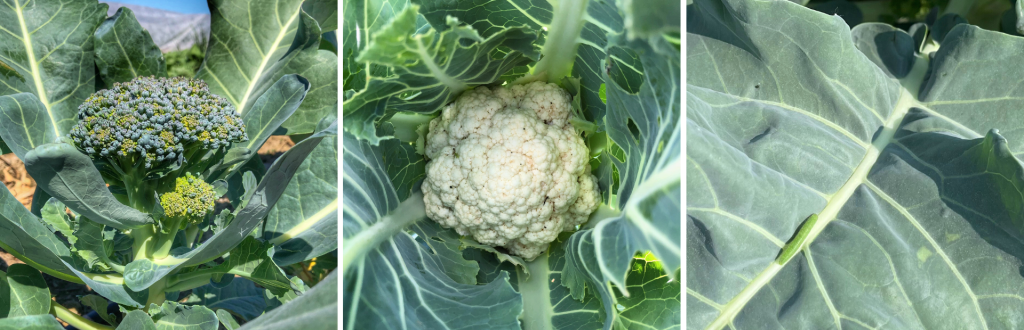
Broccoli and cauliflower are highly nutritious members of the brassica family. They are considered “cool crops,” meaning they withstand frost but generally cannot handle intense mid-summer heat. These plants are categorized as difficult to grow due to their sensitivity to heat and specific requirements for fertilizer and pest management. Because they take a long time to reach maturity, they are best started in early-March in the spring for a June harvest or in early-July for an October harvest.
Planting
- Method: These vegetables must be started indoors and transplanted as seedlings as they are slow-growing and temperature-sensitive.
- Timing:
- Spring: Start seeds indoors in early to mid-March and transplant outdoors at the end of April to harvest before summer heat arrives.
- Fall: Start seeds indoors in late-June or early-July for transplanting into the garden in August for a fall crop.
- Indoor Starting: Aim for a soil temperature of 21°C-25°C for the fastest germination.
- Location and Sun: Select a spot with full sun (preferably eastern sunlight) and fertile soil with a neutral pH. Ideally, plant broccoli and cauliflower in a spot where brassicas have not been grown for the previous 3 years.
- Spacing and Depth:
- Space plants 18″-24″ apart depending on the variety.
- When transplanting, bury the stems to the first node above the soil plug (the lighter-coloured part of the stem) to give the plants more stability as they grow.
Maintenance
- Feeding: Broccoli and cauliflower are heavy feeders. They require consistent fertilizer management to be successful. Use an all-purpose organic fertilizer or compost mid-season to replenish nutrients.
- Watering: Maintain consistent moisture; however, sitting in waterlogged soil will stunt growth and cause wilting.
- Protection: Use fine-mesh row covers to protect these susceptible plants from direct, hot sunlight and flying pests throughout their growth cycle.
- Temperature Control: If a heatwave occurs, water heavily and use shade cloth or row covers to help cool the plants, as heat can cause them to “bolt” (flower prematurely), making them inedible.
Pests and Diseases
- Common Pests: These crops are highly susceptible to aphids, cabbage worms (the larvae of white cabbage moths, pictured on the right above), and flea beetles.
- Management:
- Manual: Handpick cabbage worms or use a blast of water to dislodge cabbage worms and aphids.
- Organic Tools: Apply food-grade diatomaceous earth in the evening to deter beetles and caterpillars.
- Disease Prevention:
- Clubroot: This soil-borne disease leads to inflamed roots and stunted growth. Avoid this by rotating crops and not planting brassicas in the same spot where they grew in the last 3 to 4 years.
- pH Levels: If clubroot or other diseases are present, adding lime (if the soil is acidic) to bring the soil pH closer to 7.0 can help manage the issue.
Harvesting
- Broccoli: Harvest the main head before floret buds start to open. Once the largest head is removed, smaller side heads will often form for later harvest.
- Cauliflower: Harvest when the florets are firm and white. Consider “blanching” (covering the head with burlap) before harvest to keep the head white.
- Technique: Use a sharp knife to cut the stems beneath the heads.
- Storage: Store harvested brassicas in the refrigerator to slow their metabolism and keep them fresh.
💡 Tips for Toronto Gardeners 💡
In our local climate, the spring window for broccoli and cauliflower can be very tight. If you notice a sudden hot week in June, ensure your cauliflower stays well-watered and shaded. If the plant gets too hot, the head can bolt or “rice” (a form of bolting), so it is often better to harvest a slightly smaller head early than to wait and lose the quality to a heatwave.
Ready to Grow More?
Join our community of gardeners and start growing your own food in the city! From balcony boxes to backyard plots, community gardens, and urban farms, we’re dedicated to helping you succeed in vegetable gardening and urban agriculture.
- In the Greater Toronto Area (GTA)? Join Our Program at Downsview Park: Enroll in our full-season Grow Veggies program for hands-on learning and a share of the harvest.
- Get Monthly Tips: Sign up for our monthly Grow With Us newsletter to receive seasonal tips and our gardeners’ to-do lists.
- Follow Us: Find us on Instagram or Facebook to see what we’re growing at our teaching garden in Toronto.
 Homestead T.O.