
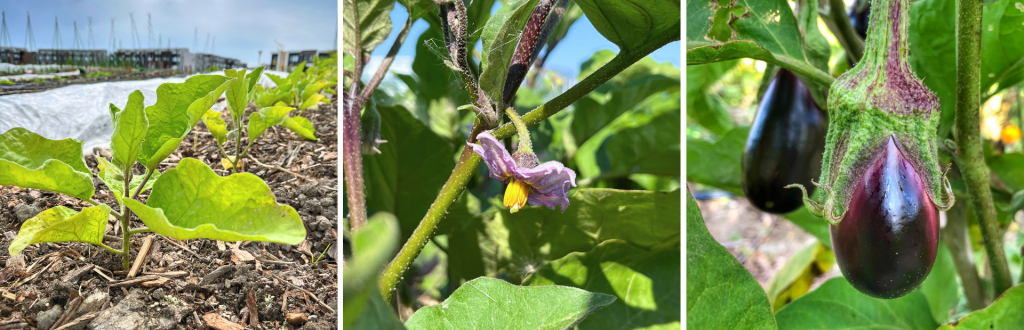
Eggplants are productive heat-loving crops that come in various shapes and sizes. They are categorized as hot crops, meaning they thrive in high temperatures and cannot survive frost. Because they have a long growing cycle, they are considered to have a moderate degree of difficulty to grow and require careful timing to ensure a successful harvest.
Planting
- Method: Eggplants have a long growing cycle and must be started indoors as seedlings.
- Timing:
- Start seeds indoors in late-February or early-March.
- Transplant outdoors only when the nighttime lows are consistently above 10–12°C, typically 3 weeks after the last frost date.
- Location and Sun: Choose a spot with full sun (at least 6–8 hours of direct sunlight).
- Soil Preparation: Eggplants are heavy feeders. Blend 2–3″ of compost into fertile, loamy, and slightly acidic soil before transplanting.
- Spacing: Space seedlings 12–18″ apart in rows at least 24″ apart.
Maintenance
- Feeding: Focus on nitrogen and phosphorus during early growth. Switch to phosphorus, potassium, calcium, and magnesium once the plant matures and begins to flower.
- Watering: Keep plants well-watered, especially during extreme heat, to enable transpiration and prevent wilting. Avoid watering in the evening to prevent fungi like powdery mildew.
- Support: Use stakes or trellises to hold heavy fruits above the ground and protect the plant from strong winds.
- Pollination: Eggplants have “perfect” flowers that point downward for self-pollination. You can improve pollination rates by lightly tapping the flowers to dislodge pollen.
Pests and Diseases
- Common Pests: Watch for aphids, potato bugs (Colorado Potato Beetle), and flea beetles.
- Management:
- Use fine-mesh row covers to block flying insects
- Handpick potato bugs and their bright yellow eggs from the undersides of leaves.
- Apply food-grade diatomaceous earth or insecticidal soap for aphids.
- Disease Prevention:
- Blossom-End Rot: Caused by a calcium deficiency in the fruits. Prevent this by maintaining consistent watering and adding calcium to the soil before fruiting.
- Crop Rotation: Do not plant eggplants in the same spot where nightshades (tomatoes, peppers, potatoes, eggplants) grew in the last 3 to 4 years to prevent recurring pests and diseases.
Harvesting
- Timing: Harvest when the fruit reaches your preferred size. The skin should appear uniformly glossy and the fruit should feel slightly soft to the touch. Do not let the fruits over-ripen or they become bitter and seedy.
- Technique: Use pruners to cut the fruit at the stem; do not pull the fruit, as the stems are tough and you may damage the plant.
- Storage: Store eggplants on the top-shelf in the refrigerator for up to 2 weeks.
💡 Tips for Toronto Gardeners 💡
Eggplant seeds can be slow to germinate. Placing your seeded trays on a horticultural heating mat can improve germination rates and hasten growth. In addition, once the seedlings have 3 sets of “true leaves”, you can “top” the plants (cut the stem just above the middle set of leaves) to cause it to send up new stems from the middle bracts which leads to a bushier plant and reduces the need for staking. It likely won’t lead to more fruits overall, but it makes the plant sturdier and reduces fruit drop-off and snapping stems.
Ready to Grow More?
Join our community of gardeners and start growing your own food in the city! From balcony boxes to backyard plots, community gardens, and urban farms, we’re dedicated to helping you succeed in vegetable gardening and urban agriculture.
- In the Greater Toronto Area (GTA)? Join Our Program at Downsview Park: Enroll in our full-season Grow Veggies program for hands-on learning and a share of the harvest.
- Get Monthly Tips: Sign up for our monthly Grow With Us newsletter to receive seasonal tips and our gardeners’ to-do lists.
- Follow Us: Find us on Instagram or Facebook to see what we’re growing at our teaching garden in Toronto.
 Homestead T.O.