
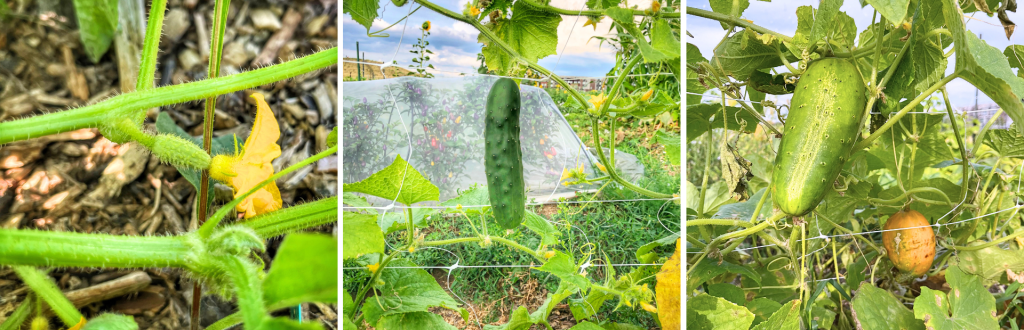
Cucumbers are incredibly productive plants when properly trellised and harvested regularly. With sufficient room to grow, they continually produce new fruit for many weeks. Varieties range significantly in size, from 1″ cucamelons and gherkins to medium-sized pickling cucumbers and much longer English cucumbers. Depending on your space, you can choose vining varieties for in-ground gardens and large containers, or compact bush varieties for smaller pots.
Planting
- Timing: Cucumbers are a hot crop. Only plant them outdoors once the soil has warmed and nighttime lows stay safely above 10°C, typically two or more weeks after the last frost date.
- Method: While you can start seeds indoors three weeks before the last frost date, it is generally easiest to direct-seed them into the garden because they grow quickly and they don’t like being transplanted.
- Location: Select a spot with full sun and enough room for trellising.
- Soil Preparation: Cucumbers are heavy feeders that require well-draining soil. Add plenty of compost and mound the soil slightly before planting.
- Spacing and Depth: Plant seeds approximately ¾” deep. Space smaller varieties 6″ apart and larger varieties 12″ apart.
Maintenance
- Watering and Feeding: As heavy feeders, cucumbers need consistent watering and regular nutrient top-ups. Use nitrogen and phosphorus-rich fertilizers early on; once the plants begin to fruit, increase watering levels and switch to a formula high in phosphorus, potassium, calcium, and magnesium.
- Trellising: As vining plants grow upward, provide a sturdy trellis using heavy-duty netting (4″ mesh) or twine stretched between posts. While the plant’s tendrils will naturally find the support, you can clip any stray vines to the trellis to keep them organized.
- Pollination: Most cucumbers require insect pollinators to produce fruit. Plant native wildflowers nearby to attract bees. If pollinators are scarce, you can manually pollinate by dabbing a cotton swab or small paintbrush inside the flowers every 2–3 days to prevent fruit from shriveling.
Pests and Diseases
Cucumbers are most vulnerable during their early and late growth stages. They are generally hardy during their middle stage of life.
- Early Stage: Watch for cucumber beetles, squash bugs, and aphids, which can weaken plants and spread viruses. Protect young plants with a fine-mesh row cover, or use diatomaceous earth if pests are seen.
- Late Stage: Broad leaves are susceptible to powdery mildew. Prevent this by always watering the soil directly, never the leaves. If mildew still appears (due to high humidity) then spray the foliage with a baking soda solution to slow its spread.
Harvesting
- Frequency: Harvest often! If cucumbers are left to get too large, the plant will stop producing new fruit, and productivity will drop.
- Selection: Pick based on size, shape, and colour. Fruit should be evenly filled out and a uniform dark green. If a cucumber begins to turn yellow, it will likely have a bitter flavor.
- Storage: Once harvested, store cucumbers in the refrigerator for up to two weeks.
💡 Tips for Toronto Gardeners 💡
In our local climate, powdery mildew often arrives in August when the nights get cooler and the morning dew sits longer on the leaves. To give your cucumbers the best chance, ensure your trellis is oriented to maximize airflow and that you regularly “wrangle” the vines to prevent them from becoming a dense, tangled mat where moist air gets trapped.
Ready to Grow More?
Join our community of gardeners and start growing your own food in the city! From balcony boxes to backyard plots, community gardens, and urban farms, we’re dedicated to helping you succeed in vegetable gardening and urban agriculture.
- In the Greater Toronto Area (GTA)? Join Our Program at Downsview Park: Enroll in our full-season Grow Veggies program for hands-on learning and a share of the harvest.
- Get Monthly Tips: Sign up for our monthly Grow With Us newsletter to receive seasonal tips and our gardeners’ to-do lists.
- Follow Us: Find us on Instagram or Facebook to see what we’re growing at our teaching garden in Toronto.
 Homestead T.O.