
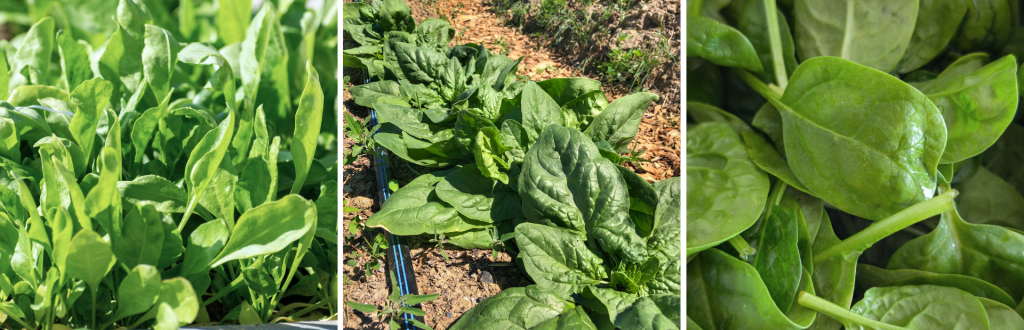
Spinach is a fast-growing leafy green that serves as a nutrient-dense staple in any urban garden. It is a quintessential cool crop that thrives in the crisp temperatures of spring and fall. Because it is a light-to-medium feeder that matures quickly, it is an excellent choice for succession planting and small-space cultivation.
Planting
- Method: Spinach is best direct-seeded into your garden or container.
- Timing: Plant as early as late-March or April, as spinach can withstand light frosts. For a fall harvest, sow again in late-August or early-September.
- Location and Sun: Choose a spot with partial shade or morning sun, as spinach is highly sensitive to heat and will bolt quickly in full afternoon sun.
- Soil and Spacing: Plant in loose, fertile soil enriched with compost. Space seeds approximately 3–4″ apart for baby leaves or 6–8″ apart for larger heads.
- Germination: Seeds are generally unreliable, but usually germinate within 5–14 days. Ensure the top layer of soil stays consistently damp until sprouts appear.
Maintenance
- Watering: Keep the soil moist but not waterlogged. On hot afternoons, misting the broad leaves can help cool the plant and prevent wilting.
- Feeding: Apply nitrogen-heavy organic supplements (like compost or a slurry) early in the growth cycle to stimulate foliage production.
- Safety Note: Avoid using manure on low-growing greens like spinach during the growing season to minimize the risk of contamination.
- Bolting Prevention: When temperatures rise above 25–28°C, spinach will bolt (go to seed) and become bitter. Use additional water, along with a shade cloth or taller companion plants on the west side, to keep the soil and foliage cool.
Pests and Diseases
- Common Pests: Watch for aphids, slugs, snails, and leafminers.
- Management: Draping fine-mesh row cover over your plants is the most effective way to block flying insects like leafminer flies. Also, a ring of diatomaceous earth around the plants will reduce the effects of slugs and snails.
- Disease: Overwatering can lead to root rot or gray mold. Ensure your soil is well-draining and maintain adequate airflow between plants.
Harvesting
- Technique: Harvest as a whole head by cutting at the soil level, or use the cut-and-come-again method.
- Cut-and-Come-Again: When leaves are 5–6″ tall, slice the top leaves off, leaving at least 2″ of the base to allow the plant to regrow for multiple harvests.
- Timing: Always harvest heavily during hot periods before the plant begins to bolt to ensure the leaves stay tender and sweet.
- Storage: Store dry leaves in air-tight containers or plastic bags in the refrigerator for up to two weeks.
💡 Tips for Toronto Gardeners 💡
Spinach can be a poor germinator if the soil gets too warm too fast. If you’re planting a fall crop in August, try placing a piece of wet burlap or wet cardboard over your seeded row for a few days to keep the soil cool and dark. This often triggers much faster germination during the heat.
Ready to Grow More?
Join our community of gardeners and start growing your own food in the city! From balcony boxes to backyard plots, community gardens, and urban farms, we’re dedicated to helping you succeed in vegetable gardening and urban agriculture.
- In the Greater Toronto Area (GTA)? Join Our Program at Downsview Park: Enroll in our full-season Grow Veggies program for hands-on learning and a share of the harvest.
- Get Monthly Tips: Sign up for our monthly Grow With Us newsletter to receive seasonal tips and our gardeners’ to-do lists.
- Follow Us: Find us on Instagram or Facebook to see what we’re growing at our teaching garden in Toronto.
 Homestead T.O.