
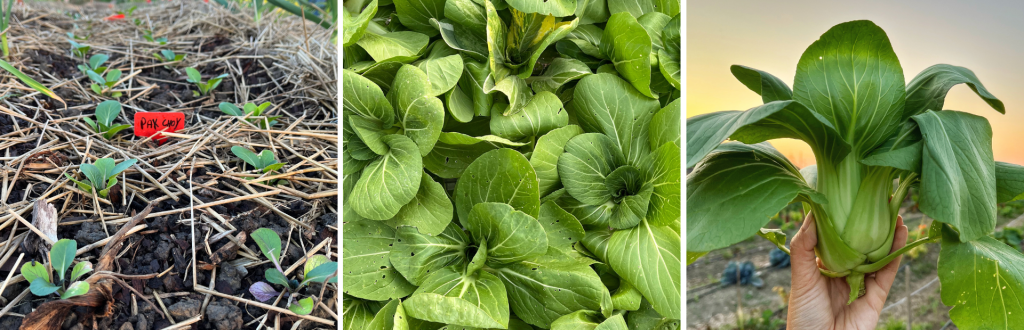
Bok choy and pak choy are popular varieties within the cabbage family. As cool crops, they are most successful when grown during the cooler temperatures of spring, late summer, or early fall. These vegetables are highly nutritious but can be quite attractive to garden pests, requiring consistent monitoring to ensure a healthy harvest.
Planting
- Timing: For a spring crop, these can be planted in the garden from late March to early May. For a fall crop, they are best started in late August or early September.
- Method: While they can be direct-seeded, it can be beneficial to start seeds indoors to shorten their outdoor maturity cycle and harvest them before the summer heat.
- Location and Sun: Select a spot with fertile soil and neutral pH. While they can handle full sun, a location with partial shade or eastern/southeastern sunlight helps prevent “bolting” (premature flowering) when temperatures rise.
- Spacing and Depth: Plant these 6” apart within rows that are spaced at least 12″ apart. If transplanting, bury the stems to the first node above the soil plug to provide better access to moisture and stability.
- Soil Preparation: Mix plenty of nitrogen-heavy compost into the soil before planting to improve both fertility and drainage.
Maintenance
- Feeding: Choys are “medium feeders” that require a moderate amount of nutrients. Use a nitrogen-heavy fertilizer or compost to encourage fast foliage growth.
- Watering: Water regularly, especially on hot days, to keep the plants from becoming stressed. Ensure the soil is well-draining to prevent water-logging, which can invite soil-borne diseases.
- Protection: Because they do not require pollination, you can keep these plants under fine-mesh row covers throughout their entire growth cycle to prevent pest infestations.
Pests and Diseases
- Common Pests: Watch for aphids, cabbage moths (cabbage worms), flea beetles, slugs, and snails. Flea beetles are particularly common in early May and create many tiny holes in the leaves.
- Management: Use fine-mesh row covers to block flying insects. Damping off, a common fungus for young plants, can be avoided by ensuring adequate air circulation and avoiding overwatering.
- Disease Prevention: Avoid planting choys in the same spot where other brassicas (like cabbage or kale) grew in the previous 3 to 4 years to prevent diseases like clubroot or black rot.
Harvesting
- Technique: Harvest based on the size and firmness of the plant. Use a sharp knife to cut the head just above the soil surface.
- Frequency: If necessary, harvest near-to-maturity plants before any predicted heatwave to prevent them from bolting and becoming bitter.
- Storage: Loosely wrap the harvest in plastic and store in the refrigerator for 3 or more weeks.
💡 Tips for Toronto Gardeners 💡
In Toronto, Bok Choy is an excellent candidate for the “fall factor.” Since our autumn days shorten quickly, these plants grow more slowly in September and October, which actually helps them stay tender and prevents them from bolting as easily in the instance of an autumn heatwave.
Ready to Grow More?
Join our community of gardeners and start growing your own food in the city! From balcony boxes to backyard plots, community gardens, and urban farms, we’re dedicated to helping you succeed in vegetable gardening and urban agriculture.
- In the Greater Toronto Area (GTA)? Join Our Program at Downsview Park: Enroll in our full-season Grow Veggies program for hands-on learning and a share of the harvest.
- Get Monthly Tips: Sign up for our monthly Grow With Us newsletter to receive seasonal tips and our gardeners’ to-do lists.
- Follow Us: Find us on Instagram or Facebook to see what we’re growing at our teaching garden in Toronto.
 Homestead T.O.