
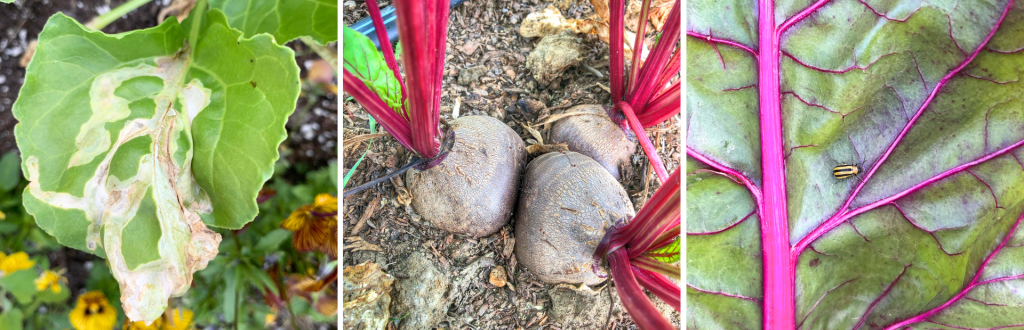
Beets and chard are among the easiest vegetables to grow, making them excellent choices for any garden. Interestingly, they were originally the same plant. While chard is was bred specifically for its large, delicious leaves, modern beets have been bred to produce large taproots, though their greens are also edible and delicious.
They are aesthetically attractive plants that work well in urban spaces. Both crops can withstand cool and hot weather, and they are suitable for areas with either full sun or partial shade.
Planting
- Method: You can start seeds indoors or direct-seed them into the garden. Generally, it is easier to direct-seed them into the ground, though starting indoors can shorten the time to harvest.
- Timing: Plant outdoors as early as 2-3 weeks before the last frost date in your area, as seedlings will survive light frosts.
- Location & Sun: Plant into loose, fertile soil. Your choice of location depends on what you want to harvest:
- For Greens (Chard/Beet tops): These will be tender and tastier in partial shade.
- For Roots (Beets): These require full sun to size up properly.
- The “Nutlet” Seed: Beet and chard seeds are actually “nutlets,” meaning each capsule contains two or more seeds. Even if you space them perfectly, multiple seedlings will likely emerge from one spot. You must thin them by snipping the weaker seedling, leaving the robust one to grow.
- Spacing: Plant seeds approximately 6″ apart. If you are growing large chard for big leaves, increase spacing to 12″.
Maintenance
- Watering: Water regularly to keep the soil moist, but ensure it does not get soggy to prevent root rot.
- Fertilizing: Both plants benefit from “side-dressing” (spreading fertilizer on the soil surface beside the plants) about halfway through maturity, roughly 30-40 days after planting.
- For Beets: Use a phosphorus-rich and a mild boron fertilizer to help the roots size up.
- For Chard: Use a nitrogen-rich fertilizer to encourage large leaf growth.
Pests and Diseases
- Leafminers: Beets and chard are particularly susceptible to the beet leafminer. Tiny flies lay white eggs on the undersides of leaves and, once they hatch, the larvae tunnel inside the leaves.
- Action: Look at the plant leaves at least weekly for tunneling and at the leaf undersides for tiny white eggs and remove affected leaves immediately and relocate them far away from the garden to break the lifecycle. Do not compost these leaves as the larvae can emerge as flies from the compost, and then the egg-laying cycle will begin again. Using row cover can prevent flies from laying eggs.
- Garden Pests: Use diatomaceous earth around the base of plants to deter cutworms, slugs, and snails.
- Rodents: Mice and voles love sweet beet roots. Consider hiding your beets behind a row of onions, which most rodents avoid.
Harvesting
- Beets:
- Greens: Harvest early while the plant is young, before the root begins to size up. Once the root starts growing, stop harvesting greens to allow the plant to focus energy on the root.
- Roots: Ready approximately 8-10 weeks after planting. Harvest when the “shoulders” (top of the root) are 2-3″ wide.
- Chard:
- Harvest individual outer leaves when they reach your desired size.
- Never take more than 20% of the leaves from a single plant at one time; this allows the plant to continue producing new leaves for later harvest.
- Storage: Store in airproof bags in the fridge for 1-2 weeks. For root vegetables, remove the greens before storing to keep the roots firm.
💡 Tips for Toronto Gardeners 💡
In our humid Southern Ontario summers, leafminers are extremely common on chard and beets. If you see squiggly, translucent lines appearing on your leaves, don’t wait! Pinch those leaves off immediately. If you plan to grow chard all summer, I highly recommend using a fine-mesh row cover right from planting day to keep the flies off entirely. Also, if you have inadequate germination, you can dig up and tease apart any seedlings with multiple germinations and then transplant the extra seedling to any bare patches (instead of thinning the multi-germinations).
Ready to Grow More?
Join our community of gardeners and start growing your own food in the city! From balcony boxes to backyard plots, community gardens, and urban farms, we’re dedicated to helping you succeed in vegetable gardening and urban agriculture.
- In the Greater Toronto Area (GTA)? Join Our Program at Downsview Park: Enroll in our full-season Grow Veggies program for hands-on learning and a share of the harvest.
- Get Monthly Tips: Sign up for our monthly Grow With Us newsletter to receive seasonal tips and our gardeners’ to-do lists.
- Follow Us: Find us on Instagram or Facebook to see what we’re growing at our teaching garden in Toronto.
 Homestead T.O.