
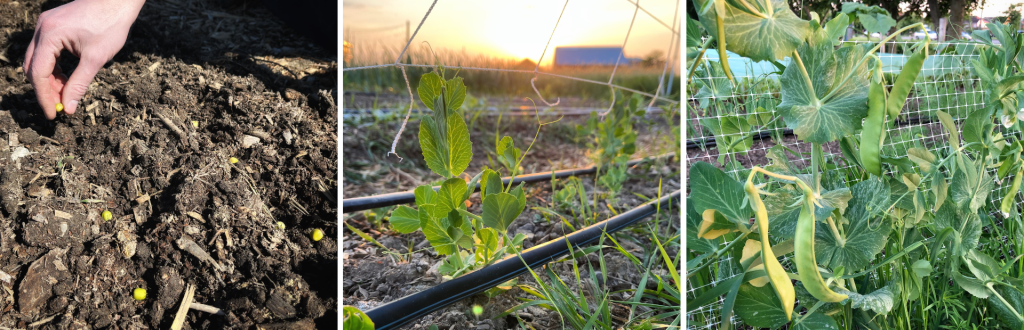
Peas are one of the first crops you can plant each spring because they germinate in cool temperatures and withstand light frosts. They are low-feeding, nitrogen-fixing plants that grow relatively quickly, often allowing you to harvest a full crop and replant the same space by late June.
There are three main types:
- Snap Peas: Thick, edible pods where the seeds are less visible.
- Snow Peas: Thin, edible pods where seeds are easily seen.
- Shelling Peas (English Peas): Only the seeds inside are eaten and the pods are discarded.
Planting
- Timing: Plant as soon as the soil is workable, typically late-March through to the end of April. Seeds germinate at temperatures as low as 4°C, though 10°C is ideal for faster germination and growth.
- Sun and Location: Select a sunny spot, ideally with morning and early afternoon sun. Consider planting peas near a fence or area where they can easily be trellised.
- Soil Preparation: Peas prefer slightly acidic soil. Mix 1/2″ of compost into the soil before planting. Legumes host bacteria that help convert nitrogen from the air into plant food, so they don’t need heavy fertilization.
- Spacing and Depth: Plant seeds 1/2″ to 1″ deep and space them 4–6″ apart.
- Companion Warning: Avoid planting peas next to onions, as they can stunt each other’s growth.
Maintenance
- Trellising: Provide a trellis immediately. Vining plants use small “tendrils” to find and hold onto supports as they grow upward.
- Watering: Do not overwater early on, as peas are susceptible to root rot. Increase watering once flowers appear and continue regularly while the plant sets fruit.
- Feeding: Add a small amount of extra phosphorus once flowers appear to encourage a larger harvest.
Pests and Diseases
- Pests: Watch for aphids and nematodes. To deter aphids, plant flowers like dill, fennel, or yarrow nearby to attract beneficial predatory insects. Planting marigolds nearby will help to deter harmful nematodes.
- Diseases: Root rot, powdery mildew, and blight are common.
- Prevention: Practice crop rotation by not planting legumes in the same spot for at least three years. Ensure your soil is well-draining.
Harvesting
- Technique: Harvest when pods reach your preferred size based on the variety. For sugar peas, look for well-filled pods that are still tender and pliable.
- Frequency: Sample your peas frequently to find your ideal taste preference.
- Timing: Aim to finish all harvesting of peas by late-June as peas suffer in the summer heat
💡 Tips for Toronto Gardeners 💡
Soaking pea seeds in water for 12 hours before planting them will improve germination levels. When planting in rows, try to position peas closer to the edge of the row to leave room for a companion plant (e.g., carrots or beets on the south or west side / lettuce or spinach on the north or east side of the peas) to grow alongside the peas and to benefit from the nitrogen fixing.
Ready to Grow More?
Join our community of gardeners and start growing your own food in the city! From balcony boxes to backyard plots, community gardens, and urban farms, we’re dedicated to helping you succeed in vegetable gardening and urban agriculture.
- In the Greater Toronto Area (GTA)? Join Our Program at Downsview Park: Enroll in our full-season Grow Veggies program for hands-on learning and a share of the harvest.
- Get Monthly Tips: Sign up for our monthly Grow With Us newsletter to receive seasonal tips and our gardeners’ to-do lists.
- Follow Us: Find us on Instagram or Facebook to see what we’re growing at our teaching garden in Toronto.
 Homestead T.O.