
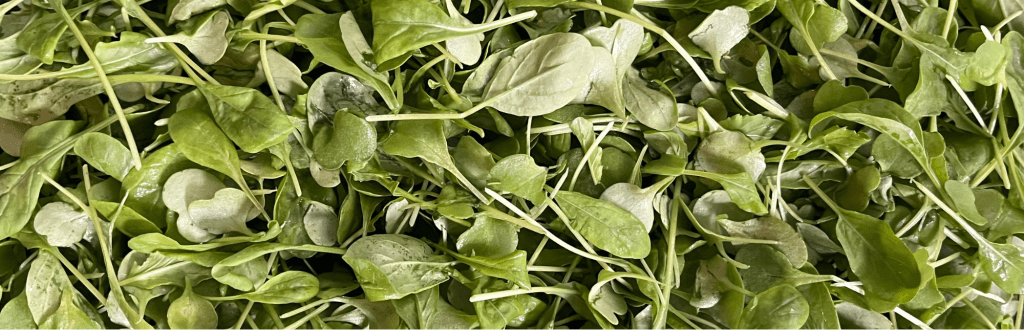
Arugula is a fast-growing, peppery leafy green that serves as a perfect addition to any urban salad garden. As a cool crop, it thrives in the lower-light and cooler temperatures of spring and autumn. Because it reaches maturity quickly, often providing a first harvest in just 35 days, it’s an ideal candidate for succession planting before and after a summer crop to maximize your garden’s output throughout the season.
Planting
- Method: Arugula should be direct-seeded into your garden rather than transplanted.
- Timing: For a spring crop, plant outdoors approximately 1-2 weeks before the last frost date (typically mid-to-late April in Toronto), though it can usually be planted as early as late-March if there’s no frost in the weather forecast, as it is frost-hardy. For a fall harvest, you can start new seeds in late August or early September, and even into late September if the crop is protected.
- Location and Sun: Select a spot with partial shade to full sun, though morning sunlight is preferable to late-day sunlight. If you attempt to plant arugula during the heat of summer, select a cool, shady spot to reduce the likelihood of bolting.
- Soil and Spacing: Plant into loose, well-drained soil enriched with compost. If you plan on harvesting full heads of arugula, use 6” spacing. If you plan on harvesting individual leaves, then space seeds approximately 4″ apart.
- Germination: Seeds typically germinate in 4–7 days when soil temperatures are between 20°C and 25°C. They can also germinate in soil temperatures as low as 4°C, though it will take a few extra days.
Maintenance
- Watering: Keep the soil constantly moist until the seeds germinate. Once established, ensure the soil stays damp but not sopping wet to allow for adequate oxygen at the root level.
- Feeding: Arugula is a light-feeder, so it doesn’t need much fertilizer. However, as a leafy green, arugula benefits from nitrogen-focused organic supplements in particular to encourage foliage growth.
- Safety Note: Avoid using manure on low-growing greens like arugula to minimize the risk of E. coli contamination.
- Weather Mitigation: If temperatures rise above 28°C, arugula may “bolt,” meaning it will send up a flower stalk and the harvest will become bitter. Use shade cloth or place taller plants nearby to provide afternoon shade to delay this process.
Pests and Diseases
- Common Pests: Like other leafy greens, arugula is susceptible to aphids, slugs, and snails. As a member of the mustard family, it may also be targeted by flea beetles, which create many tiny holes in the leaves.
- Management: Use fine-mesh row covers to block flying insects like flea beetles from landing on your crop. For slugs and snails, create a circle of diatomaceous earth around the base of your plants.
- Disease: Ensure proper spacing and avoid overwatering to prevent gray mold and powdery mildew.
Harvesting
- Timing: You can begin harvesting individual leaves once they reach your preferred size; they are considered mature when they are at least 4″ long.
- Technique:
- Cut-and-Come-Again: Remove outer leaves individually or else horizontally slice off the top of the leaves at a level of 2.5″ above the soil level. The plant will regrow, allowing for 3–4 harvests from the same plant.
- Whole Head: Cut the entire head at the soil level once it reaches full size.
- Storage: Store arugula in air-tight containers in the refrigerator to maintain freshness.
💡 Tips for Toronto Gardeners 💡
In our local climate, the spring greens window can be surprisingly short before the heat and humidity hits. Try planting a small patch every week starting in mid-April. This spreads out your harvest and provides you with a backup crop that is less likely to bolt.
Ready to Grow More?
Join our community of gardeners and start growing your own food in the city! From balcony boxes to backyard plots, community gardens, and urban farms, we’re dedicated to helping you succeed in vegetable gardening and urban agriculture.
- In the Greater Toronto Area (GTA)? Join Our Program at Downsview Park: Enroll in our full-season Grow Veggies program for hands-on learning and a share of the harvest.
- Get Monthly Tips: Sign up for our monthly Grow With Us newsletter to receive seasonal tips and our gardeners’ to-do lists.
- Follow Us: Find us on Instagram or Facebook to see what we’re growing at our teaching garden in Toronto.
 Homestead T.O.