
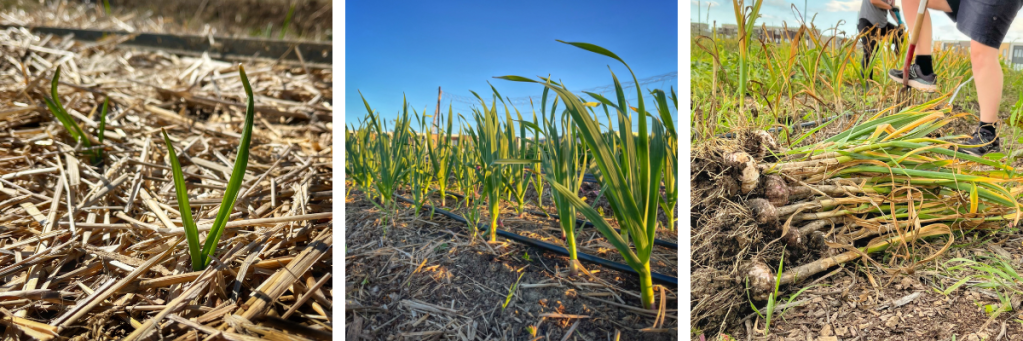
Garlic is a high-value, delicious, and easy-to-grow crop for your home vegetable garden, yielding bulbs that are much tastier than most grocery store alternatives. In our area (Toronto, Ontario), garlic is planted in the fall, prior to the cold winter, for a process called vernalization. This cold, dormant period triggers larger bulb development and a greater harvest.
When planted correctly, garlic can be one of the easiest and most rewarding vegetables to maintain and harvest the following summer.
Timing Your Planting for Success
Plant your garlic cloves between mid-October and mid-November in the Toronto area. This timing is late enough to prevent any premature above-ground sprouting before winter, yet early enough to ensure the cloves vernalize correctly for robust bulb development.
How to Plant Garlic
1. Location and Soil Preparation
- Choose the Location: Select a well-draining spot that receives full sun.
- Crop Rotation: Rotate your planting location. Ensure you plant your garlic in a different area than where it grew the previous year to prevent nutrient depletion and disease build-up.
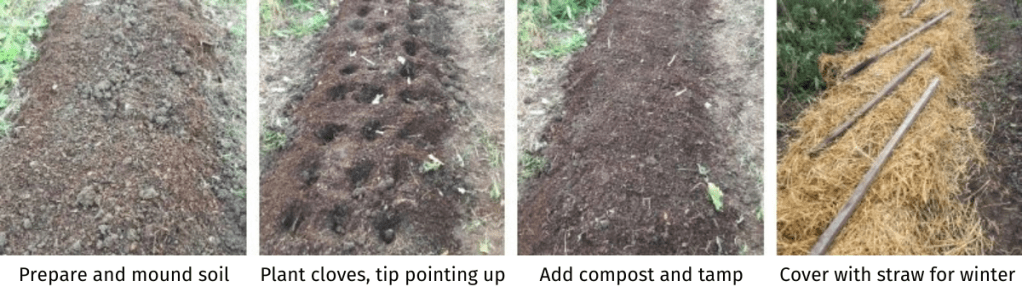
- Soil Needs: Garlic thrives in loose, fertile soil (preferably eight or more inches deep) with a slightly acidic pH (6.5–7.0). For gardeners dealing with the heavy clay soil that is common in the Toronto area, ensure the bed is well-amended and mounded to prevent waterlogging. You can learn more about managing soil in our guide Soil Preparation.
2. Preparing the Bed
- Use a garden fork to loosen the soil to a depth of at least eight inches.
- Incorporate two inches of aged compost into the loosened soil.
- Mound the soil to ensure proper drainage; this is a critical step for successful GTA gardening as it prevents the bulbs from rotting.
- Check the pH after applying compost. Add garden lime if the pH level is below 6.3, as the soil often tests artificially high when the ground is cold. Add sulfur or extra compost if the pH level is above 7.3 Find out more in The Importance of pH Levels and Soil Testing.
3. Planting the Cloves
- Prepare the Cloves: Separate the garlic bulb into individual cloves, ensuring the protective papery skin remains intact on each clove.
- Planting Depth and Spacing: Plant each clove four to six inches deep and at least six inches apart. Plant the clove tip pointing skyward.
- Cover and Tamp: Cover the cloves with compost and tamp down gently to prevent air pockets.
- Practical Tip: Planting larger cloves will generally lead to larger bulbs, although this can be partially offset by using even more compost on smaller cloves.
4. Winter Protection
- Mulching: Once the bed is planted, cover it with a thick layer of straw (not hay!) or disease-free leaf litter. This insulation stabilizes the soil temperature and protects the cloves from frequent thawing and refreezing during varied winter temperatures.
Essential Garlic Growing Tips
- Spring Start: In early spring, once all risk of frost has passed, removing some or all of the straw mulch will warm the soil faster and give your garlic a head start, optimizing growth rates.
- Weed Control: Keep garden beds well-weeded throughout the summer to minimize competition for nutrients.
- Container Growing: Garlic will generally size up more when planted in-ground than in containers. You can partially offset this in containers by supplementing with additional phosphorus next spring and summer. Check out the Container Growing Media guide for more information.
- Companion Planting Alert: Garlic and other alliums experience inhibited growth rates from certain plants; avoid planting garlic near beans or peas. Refer to Benefits of Companion Plants for helpful planting partners.
- Water Reduction: Cut back on watering a few weeks before harvest; this concentrates the flavour in the bulb.
- Harvest Time: Harvest your garlic bulbs once the bottom four plant leaves have dried up, as the bulbs will not size up much after that point. This is usually mid-to-late July, which leaves you time to plant another vegetable crop in the space once you harvest the garlic. Learn more in When to Harvest Your Vegetables.
Ready to Grow More?
Join our community of gardeners and start growing your own food in the city! From balcony boxes to backyard plots, community gardens, and urban farms, we’re dedicated to helping you succeed in vegetable gardening and urban agriculture.
- In the Greater Toronto Area (GTA)? Join Our Program at Downsview Park: Enroll in our full-season Grow Veggies program for hands-on learning and a share of the harvest.
- Get Monthly Tips: Sign up for our monthly Grow With Us newsletter to receive seasonal tips and our gardeners’ to-do lists.
- Follow Us: Find us on Instagram or Facebook to see what we’re growing at our teaching garden in Toronto.
 Homestead T.O.