
Blossom-End Rot (BER) is one of the most common and frustrating issues for vegetable growers. While it looks like a disease, BER is actually a physiological disorder caused by a lack of calcium in the developing fruit. It is not contagious, and you can usually prevent it with simple adjustments to your garden maintenance.
What is Blossom-End Rot?
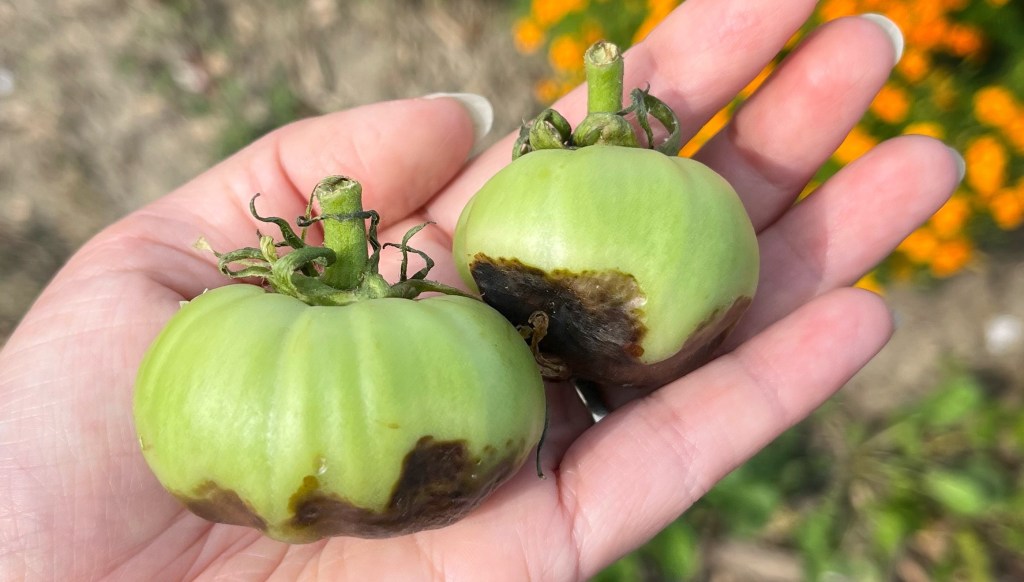
Blossom-End Rot appears as a sunken, dark, leathery spot that starts on the end of the fruit opposite the stem (the ‘blossom end’). It commonly affects the first set of fruit on:
- Tomatoes
- Peppers
- Eggplants
- Summer Squash
The main culprit is the plant’s inability to move sufficient calcium into the fruit during periods of rapid growth. This issue is often a result of inconsistent water uptake, not necessarily a calcium deficiency in the soil.
Top Causes of Blossom-End Rot
Vegetable gardening in the Toronto area (GTA) often involves challenging conditions that make plants susceptible to BER:
- Inconsistent Watering: The most frequent cause. During the Ontario growing season, erratic rainfall and the high summer temperatures can lead to wildly fluctuating soil moisture. This prevents the steady movement of calcium from the soil, through the roots, and into the developing fruit. Calcium is one of the least mobile nutrients and, during times of drought, plants will take in the easier nutrients.
- Poor Soil Structure: The heavy clay soil common across the GTA can become compacted, hindering both water absorption and root respiration. When soil is waterlogged, roots cannot properly take in oxygen, and they go dormant, preventing calcium uptake.
- Temperature Stress: Extreme heat, especially sudden heat waves, increases the rate of transpiration (water loss) in the leaves. When water moves too quickly to the leaves to cool the plant, it leaves the fruit under-supplied with calcium.
- Fertilizer Imbalance: Too much nitrogen encourages excessive leafy growth (foliage) at the expense of fruit production and can interfere with the uptake of other key nutrients like calcium.
Practical Tips for Prevention and Treatment
Preventing Blossom-End Rot is much easier than treating it. Focus on consistent care from the moment you transplant your hot crops.
1. Manage Water for Consistent Calcium Uptake
Calcium moves within the plant along with water. Consistent, deep watering is the single most important preventative measure.
- Water Deeply: Provide a deep, thorough watering every two to three days, rather than a light watering every day. This encourages deep root growth.
- Time Your Watering: Water your plants in the morning. This ensures that the necessary water is available to the plant throughout the day when the sun is out, supporting photosynthesis and nutrient transport.
- Water More Frequently On Hot Days: Plants use most of their water for evaporation/cooling on hot days, and not as much for nutrient transport.
- Improve Soil: For heavy GTA gardening soils, amend with compost and organic matter to ensure well-draining soil that still retains moisture. For more on soil, check out [Soil Preparation].
2. Ensure Proper Nutrition
While the issue is usually water-related, ensuring adequate soil calcium is a good safeguard.
- Fertilize Mindfully: When your tomatoes and peppers begin to flower, switch to a fertilizer that is lower in nitrogen and higher in phosphorus, potassium, and calcium.
- Mid-Season Nutrients: When the plant begins to fruit, focus specifically on supporting fruit development by adding calcium and magnesium. For a detailed breakdown of nutrients, see [What Plant Nutrients Do and How to Fertilize].
3. Protect Soil and Plants
- Use Mulch: Apply a thick layer of organic mulch (e.g., straw, shredded leaves) around your plants. Mulch is crucial in the summer as it helps the soil retain an even moisture level and buffers against the rapid temperature swings. Note that mulch reduces available nitrogen in the soil so only mulch your garden beds as plants mature, as they need less nitrogen at that time.
- Prune Carefully: Prune only as needed to improve air circulation. Excessive pruning of foliage can subject fruit to greater temperature stress.
4. Treatment After BER Appears
Once a fruit is affected by Blossom-End Rot, it will not recover.
- Remove Affected Fruit: Pick and discard any fruit showing BER symptoms. This prevents the plant from wasting energy trying to ripen damaged fruit.
- Adjust Care Immediately: Do not panic or over-apply fertilizer. Immediately focus on correcting your watering schedule to ensure deep and consistent moisture. This will protect all subsequent fruit.
- Use a Calcium Foliar Spray: Mix 1 tsp of liquid calcium (e.g., CalMag fertilizer) to 1 liter of water in a spray bottle and spray all susceptible fruiting plant leaves.
Ready to Grow More?
Join our community of gardeners and start growing your own food in the city! From balcony boxes to backyard plots, community gardens, and urban farms, we’re dedicated to helping you succeed in vegetable gardening and urban agriculture.
- In the Greater Toronto Area (GTA)? Join Our Program at Downsview Park: Enroll in our full-season Grow Veggies program for hands-on learning and a share of the harvest.
- Get Monthly Tips: Sign up for our monthly Grow With Us newsletter to receive seasonal tips and our gardeners’ to-do lists.
- Follow Us: Find us on Instagram or Facebook to see what we’re growing at our teaching garden in Toronto.
 Homestead T.O.