
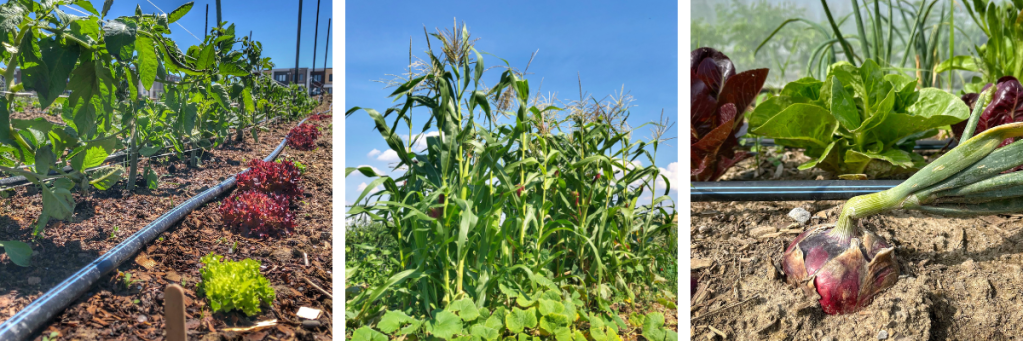
Companion planting is the strategic partnering of different plants to create a mutually beneficial micro-ecosystem in your garden. This age-old technique helps boost yields and improve plant health, making it an essential practice for intensive vegetable gardening in the city where space and time are often limited.
Boosting Growth and Battling Pests
By growing plants together, you can leverage their natural attributes to enhance your primary crops. The benefits of this practice are numerous for any urban gardening enthusiast:
- Pest Deterrence: Aromatic plants (e.g., certain herbs) or spiny crops (e.g., squash, cucumbers) can naturally repel or confuse harmful insects, protecting your more vulnerable vegetables. This strategy allows you to harvest more without relying on chemical controls.
- Weed Suppression: Planting low-growing, non-invasive, and light-feeder groundcovers like oregano or lettuce beside your main crops effectively shades the soil, suppressing new weed germination.
- Nutrient Provision (Fertilization): Nitrogen-fixing plants, such as beans or peas (legumes), introduce essential nitrates into the soil, significantly improving the growth rate of nearby crops. As companion plants naturally decompose, they also return nutrients to the soil if they are left in place as they die back.
- Flavour Enhancement: Certain companion pairings can subtly alter the flavour profiles of your main harvest. For example, planting marigolds, basil or bee balm near tomatoes is known to improve the taste of the fruit.
- Improving Soil Texture: This is especially helpful when dealing with something like the typical urban Toronto clay soil that we deal with here. Pairing deep-rooted plants, such as carrots (which help break up soil particles), with crops that prefer loose, well-drained soil (like tomatoes) can enhance the overall soil structure and drainage for both.
- Shade and Windbreaks: Protect sun-sensitive or tender crops (like broadleaf vegetables) from harsh summer sun and strong winds by planting them on the north or east side of taller, sun-loving plants. This effectively increases your overall yield in a small space.
- Natural Trellising: Tall, sturdy plants like corn or sunflowers provide excellent vertical support, acting as natural trellises for vining crops like pole beans and pickling cucumbers.
Practical Companion Planting Tips
To get the most out of your urban garden during the short growing season, such as what we have in Toronto, incorporate these practical tips:
- Inter-crop for Maximum Yield: Use inter-cropping by sowing fast-growing, low-profile crops (like radishes or lettuce) directly beside slower-growing, larger plants. The fast crops provide temporary ground cover and will be harvested well before the main crop needs the space and nutrients to mature.
- Know Your Plant Families: Placing plants from the same family together often leads to competition for nutrients and attracts the same pests. Instead, strategically pair plant families for mutual benefit:
- Carrots pair well with Nightshades (tomatoes, peppers) and Alliums (onions).
- Legumes (beans, peas) are excellent partners for Brassicas (cabbage, kale, broccoli, beets), but should be kept away from Alliums (onions, garlic). This is especially valuable for heavy-feeding Brassicas in urban gardens.
- Use Aromatic Deterrents: Interplant susceptible vegetables with members of the carrot or mint family (dill, cilantro, celery, mint, oregano) to confuse and deter common garden pests before they can find your main crops.
- Maximize Density, Conserve Water: Increase your planting density slightly to reduce the amount of exposed soil. This technique helps conserve water by reducing evaporation during sunny Ontario summer days.
- Placement: Companion plants should be sown densely among your main vegetable crops, utilizing any bare soil space to provide their benefits throughout the season.
For ease of companion planting, there are numerous companion planting charts available online. Using these charts and techniques as part of your garden planning and planting will improve the overall productivity of your garden and the health of your garden soil.
Ready to Grow More?
Join our community of gardeners and start growing your own food in the city! From balcony boxes to backyard plots, community gardens, and urban farms, we’re dedicated to helping you succeed in vegetable gardening and urban agriculture.
- In the Greater Toronto Area (GTA)? Join Our Program at Downsview Park: Enroll in our full-season Grow Veggies program for hands-on learning and a share of the harvest.
- Get Monthly Tips: Sign up for our monthly Grow With Us newsletter to receive seasonal tips and our gardeners’ to-do lists.
- Follow Us: Find us on Instagram or Facebook to see what we’re growing at our teaching garden in Toronto.
 Homestead T.O.