
You’ve prepared your beds, and your vegetable gardening season is well underway. To ensure your plants not only survive the Ontario growing season but thrive and produce a flavourful, abundant harvest, you need to understand soil nutrients. While plants generate 90 to 95% of their required energy through photosynthesis, they rely on nutrients in the soil for the remaining essential 5 to 10% of their calories.
The Core 3: Understanding N-P-K for Better Vegetable Gardening
The three major nutrients that drive most vegetable growth are Nitrogen (N), Phosphorus (P), and Potassium (K). They’re all important, but they each provide the plant with different things that may be more optimal or less optimal, depending on your plant selections.
- Nitrogen (N) for Lush Green Growth: Nitrogen is vital for creating chlorophyll, which gives foliage its green colour and drives photosynthesis. It is used extensively during a plant’s early-mid lifecycle but it may become counterproductive near harvest time if the leaves are not the item being harvested.
- Tip: Apply nitrogen when you want leaf growth, such as at all times for leafy greens or in a plant’s early, vegetative growth stages for other harvests. For plants where you harvest the fruit or root (e.g., tomatoes, carrots), cut back on nitrogen as the plant matures, as excessive nitrogen can prioritize leaf growth over the desired harvest.
- Phosphorus (P) for Roots and Fruits: Phosphorus stimulates cell division, helping to drive new plant growth. It is also critical for forming and transporting sugars and starches, which support fruit, tuber, bulb, and taproot setting.
- Tip: Phosphorus is needed in all phases of growth. In particular, increase the amount a few weeks before the harvest of fruits, stems, or roots. For optimal root development, add phosphorus. Because phosphorus is highly mobile and can leach quickly during rain, apply it in small amounts but often.
- Potassium (K) for Hardiness and Quality: Potassium helps build proteins and assists with the movement of other nutrients throughout the plant. Crucially, it improves a plant’s hardiness by helping it regulate temperatures and reduce water loss.
- Tip: More potassium is needed as plants mature and when they are setting fruit as it helps to prevent fruit drop. This nutrient is especially beneficial during periods of hot and cold weather—a common challenge during the short Ontario growing season.
Beyond the big three, plants need other macronutrients like calcium, magnesium, and sulfur in smaller amounts for overall health. In particular, calcium helps strengthen a plant’s cell walls, leading to crisper and longer-lasting harvests as well as less blossom-end rot. Magnesium encourages new budding of plants, leading to new growth. Other micronutrients like zinc, copper, and boron improve plant health and enhance the flavour of your harvest.
💡 Pro tip! Learning the impact of nutrients such as sulfur, copper, and boron and fertilizing with your preferred nutrients a few weeks before you harvest will help you tailor the flavour of your harvest according to your own preferences.
Practical Fertilizing Tips for Toronto Vegetable Gardeners
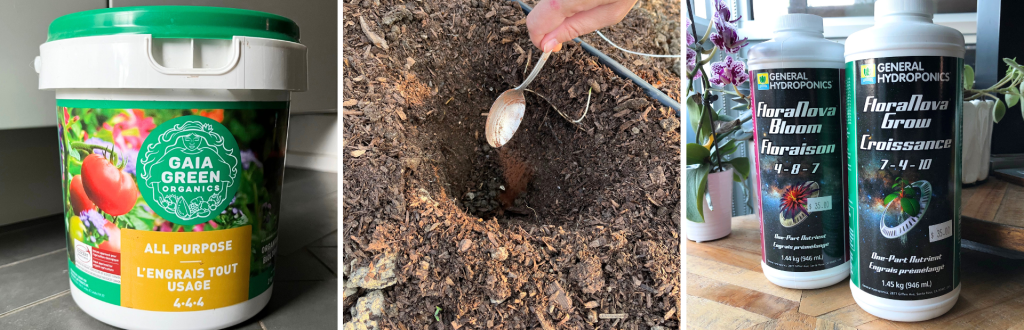
Start your season strong by using a slow-release, balanced fertilizer as a base. Compost or worm castings are excellent choices. Most vegetable gardens benefit from a general fertilizer application at least twice per year. Then, add additional nutrients as the season progresses according to the specific impacts that you want to achieve in your plant or your harvest (e.g., sizing up leaves, roots or fruits, crisping up leafy greens, enhancing the flavour of fruits).
Summary of Fertilizer Needs by Plant Type
- Pre-Planting: Add a mild general fertilizer blend concentrated on Nitrogen and Phosphorus before planting your vegetables.
- Seedlings: Young seedlings thrive with mostly nitrogen and phosphorus.
- Leafy Greens: Need additional nitrogen and phosphorus as they grow. For crisper leaves, add Calcium.
- Fruiting/Rooting Plants: Require a shift to phosphorus and potassium as they mature and approach flowering, fruiting, or forming taproots.
Applying the Right Amount
The amount of fertilizer needed depends on your plant’s status as a feeder:
- Heavy Feeders (Tomatoes, Squash, Potatoes): Require approximately 3 inches of compost annually, as they rapidly deplete the soil’s nutrients.
- Medium Feeders (Onions, Carrots, Chard): Need 1.5-2 inches of compost per year.
- Light Feeders (Peas, Beans, Lettuce): Require less than 1 inch of compost.
If you are container gardening, ongoing fertilization is even more important! Container potting mixes retain fewer nutrients, and water overflow or heavy rain rapidly leaches them away. Focus on slow-release options like compost or granular fertilizers in your pots.
Mid-Season Application Methods
Where and how you apply fertilizer is just as important as what you use. Most nutrients are absorbed through the soil, so avoid scattering fertilizers where they can wash away.
- Incorporation (Pre-Planting): Thoroughly mix the fertilizer into the soil at the root level to improve texture and prevent leaching.
- Top-Dressing (General Top-Up): Spread fertilizer across the top of the garden bed, directly beneath established plants (best for taller vegetables like tomatoes or cucumbers). Rainfall and earthworms will work the nutrients into the root zone. This is ideal when applying fertilizer to an already-planted garden.
- Side-Dressing (Sensitive Plants): Run a line of fertilizer about six inches to the side of the plants for those with edible parts close to the ground (e.g., lettuce, beets). This prevents the fertilizer from touching and potentially burning the harvest.
- Foliar Spray (Quick Fix): A diluted nutrient solution sprayed directly onto the leaves. This is mainly used for nutrients that are slow to move through the plant (immobile nutrients), such as Calcium. For example, a calcium foliar spray can offer a quick solution for treating an active issue like Blossom-End Rot in tomatoes.
A Note on Timing: Compost and granulated fertilizers take time for their nutrients to become available to your plants. For this reason, you need to apply them one to four weeks in advance of when you require them to have an effect.
Understanding the N-P-K Label
The N-P-K indicators on a fertilizer bag represent the percentage of the product’s weight composed of nitrogen, phosphorus, and potassium, respectively. Organic fertilizers typically have lower N-P-K numbers than chemical fertilizers because they contain other organic matter (like carbon and oxygen) that improves long-term soil health.
For a deeper dive into common nutrient issues, see our The Importance of pH Levels and Blossom-End Rot mini guides. For specific strategies tailored to your garden’s base health, review our Soil Testing guide.
Ready to Grow More?
Join our community of gardeners and start growing your own food in the city! From balcony boxes to backyard plots, community gardens, and urban farms, we’re dedicated to helping you succeed in vegetable gardening and urban agriculture.
- In the Greater Toronto Area (GTA)? Join Our Program at Downsview Park: Enroll in our full-season Grow Veggies program for hands-on learning and a share of the harvest.
- Get Monthly Tips: Sign up for our monthly Grow With Us newsletter to receive seasonal tips and our gardeners’ to-do lists.
- Follow Us: Find us on Instagram or Facebook to see what we’re growing at our teaching garden in Toronto.
 Homestead T.O.