
Recognizing the difference between a beneficial insect (a “good bug”) and a pest (a “bad bug”) is fundamental for a successful growing season. A healthy garden ecosystem has far more allies than enemies, and effective pest management starts with inviting those allies in.
Welcoming Beneficial Insects (The Good Bugs)
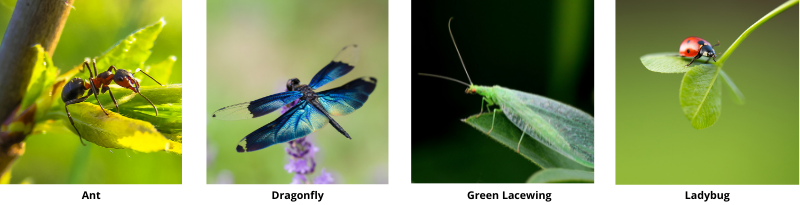
To create a garden that supports beneficial insects, integrate herbs and flowers directly into and around your vegetable beds. This process, called companion planting, is a highly effective and low-effort technique for maximizing your harvest during the short growing season.
- Ladybugs and Parasitic Wasps: These insects prey on aphids, hornworms and other soft-bodied pests. Invite them into your garden by planting flowers and herbs with small blooms like dill, fennel, Queen Anne’s lace, and yarrow nearby.
- Hoverflies: The larvae of hoverflies are voracious eaters of aphids. Plant marigolds near susceptible crops, such as tomatoes and brassicas, to attract them.
You can learn more about strategic planting by visiting our guide Benefits of Companion Plants.
Common Vegetable Garden Pests (The Bad Bugs)
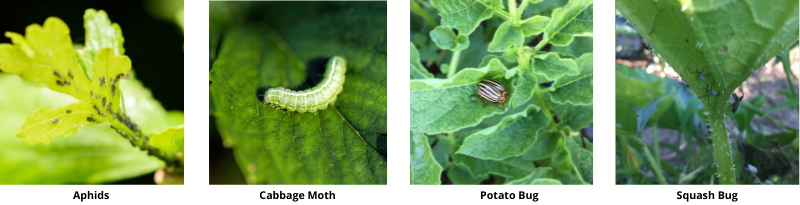
While most insects in the garden are neutral or helpful, a few common pests can damage crops. Even after taking the above steps for natural pest deterrence, you still need to watch for signs of these bad species, especially as your vegetable plants are young and vulnerable.
| Pest Name | Common Target Crops | Practical Prevention Strategy |
| Flea Beetles | Brassicas (cabbage, kale, radish), nightshades | Use fine-mesh row cover atop your vegetables early in the season. Or, repel some of them by surrounding their target vegetables with fragrant herbs. |
| Slugs and Snails | Leafy greens (lettuce, spinach, chard), young seedlings | Use physical barriers like a sprinkle of diatomaceous earth. Or, place a daytime home (e.g., lay a board across the soil to shade them from sunlight) nearby then regularly check/empty the underside of the board. Alternatively, hand-remove them in the mornings or evenings. |
| Squash Vine Borer | Squash, zucchini, pumpkins | Wrap the very bottom 3” of each plant’s stem with a collar made of tin foil or a stem collar to prevent egg-laying. |
| Colorado Potato Beetle | Potatoes, eggplants, tomatoes | Regularly inspect the underside of leaves for bright yellow egg clusters and remove them immediately. |
| Aphids | Nearly all vegetable plants | Plant mint or allium family members nearby to repel them. Or, use trap crops (such as tobacco to protect nightshades and collards to protect brassicas) to lure them away from your desired vegetables. |
Check out our Top Tips for for a Pest-Free Vegetable Garden next!
Ready to Grow More?
Join our community of gardeners and start growing your own food in the city! From balcony boxes to backyard plots, community gardens, and urban farms, we’re dedicated to helping you succeed in vegetable gardening and urban agriculture.
- In the Greater Toronto Area (GTA)? Join Our Program at Downsview Park: Enroll in our full-season Grow Veggies program for hands-on learning and a share of the harvest.
- Get Monthly Tips: Sign up for our monthly Grow With Us newsletter to receive seasonal tips and our gardeners’ to-do lists.
- Follow Us: Find us on Instagram or Facebook to see what we’re growing at our teaching garden in Toronto.
 Homestead T.O.