
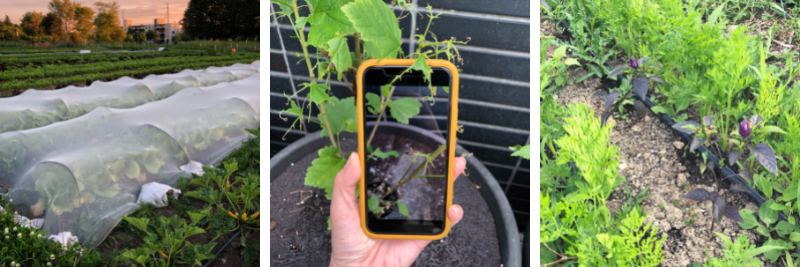
Pests and diseases are an unavoidable reality of growing food, especially when you are engaged in intensive vegetable gardening in dense urban areas like Toronto (GTA). Successful gardening relies on being proactive rather than reactive. By focusing on prevention and early detection, you can protect your valuable harvest throughout the entire growing season.
Prevention and Garden Health: Your First Line of Defence
The best strategy is always to avoid pest and disease issues entirely. A healthy, fast-growing plant is your strongest defence against most garden invaders.
- Practice Crop Rotation: Pests and diseases are often repeats of previous years’ problems. Be sure to rotate your crops annually to disrupt the life cycle of pests that overwinter in the soil or crop debris, making it harder for them to find their preferred food source. For more on this critical technique, visit our Garden Planning guide.
- Choose Resistant Varieties: When buying vegetable seeds, select varieties that are known to be resistant to common pests. For example, savoy cabbage varieties tend to attract fewer cabbage moths and earwigs than green cabbage.
- Improve Soil Health: Ensure your soil is friable (loose) and well-draining. This reduces the presence of soil-borne pests and it allows oxygen to reach the roots, leading to healthier, low-stress plants. Consult our guide Soil Preparation for detailed tips.
- Use Row Cover: Fine-mesh row cover is the most effective physical barrier against flying insect pests, including flea beetles, cabbage moths, and aphids. This is an essential tool in the early Ontario growing season when tender seedlings are most vulnerable. Use row cover on crops that do not require pollination, such as cabbage, radish, beets, and chard. For more information, see our Using Row Cover guide.
- Companion Planting: Interplanting fragrant crops can mask the scent of susceptible vegetables, making them difficult for pests to locate.
- Plant anything in the mint family (such as peppermint, basil, or catnip) or allium family (onions and garlic) to repel aphids.
- Nasturtiums can be strategically planted to act as a trap crop, luring aphids away from your main vegetable plants. See our Benefits of Companion Plants guide for more ideas.
- Employ Trap Crops: Lure pests away from your main vegetable harvest. Plant sacrificial crops that pests prefer, such as nasturtiums for aphids or collard greens for flea beetles and cabbage moths.
- Maintain Garden Cleanliness: Remove all crop debris from infested areas after harvest and rake the soil. This simple step makes it difficult for pests to overwinter and emerge in the spring. Note that this step is only following infestations and isn’t necessary in areas that didn’t experience pest damage.
Effective Treatment Methods

For any pest you encounter, focus on the least toxic, most targeted approach first.
- Hand Removal: For small-scale gardening, manually picking off pests is the most reliable treatment. Check your plants in the mornings and evenings. Slow-moving pests like potato beetles can be picked up or brushed into a bucket.
- Diatomaceous Earth (DE): This fine powder is a physical deterrent that helps repel slugs, snails, and beetles. Draw a circle of DE around the base of the plant and reapply after rain.
- Soapy Water Spray: Mix one teaspoon of castile soap with one litre of water in a spray bottle. This is effective against soft-bodied pests like aphids and squash bugs, bothering them with minimal effect on the plants.
- Manage Blossom-End Rot: This common problem, often mistaken for a disease, is a nutrient deficiency where the fruits lack sufficient calcium. It affects tomatoes, peppers, eggplants, and squash. Ensure consistent, deep watering, particularly in the hot, dry periods of the Ontario growing season so that calcium in the soil can be transported upward in the plant and use a calcium-rich foliar spray to quickly address the deficiency. For a detailed guide, see Blossom-End Rot.
- Attract Beneficial Insects: Encourage ‘good bugs’ like ladybugs, parasitic wasps, and ground beetles to help manage pest populations naturally. Planting flowers such as dill, Queen Anne’s lace, fennel, and yarrow can help draw these helpful predators to your garden. Learn which bugs to welcome in Good Bugs vs Bad Bugs.
Common Pests and Targeted Management
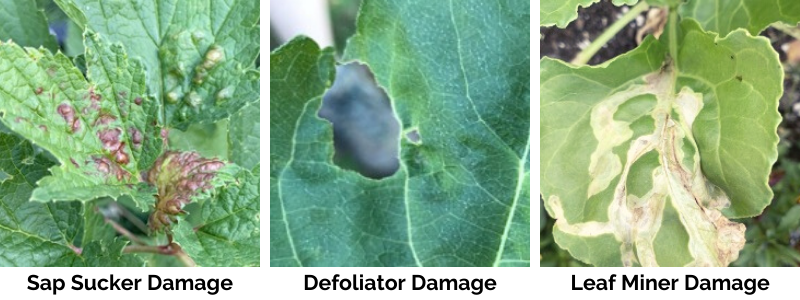
Knowing when common pests appear in your area can help you plan your defences. Here are a few common pests we see where we grow in the Toronto area.
| Pest | Target Crops | When to Watch (Ontario) | Prevention & Treatment |
| Flea Beetles | Brassicas (cabbage, kale, radish, and arugula) | Emerge reliably in early May, when daytime temperatures reach 10°C. | Use fine-mesh row cover. Dust plants with diatomaceous earth (DE). Consider planting partially-grown seedlings to avoid their peak emergence period. |
| Slugs and Snails | Leafy greens (lettuce, spinach, cabbage) | Active in damp, shady conditions; leave tell-tale slime trails in the morning. | Create a circle of diatomaceous earth or coffee grounds around the base of target plants, reapplying after rain. Hand remove them in the mornings or evenings. Place a board on the ground near to leafy greens to serve as an ideal daytime home for slugs, then periodically check the board during daytime and remove any slugs. |
| Squash Vine Borers | Zucchini, Pumpkins, and other Summer/Winter Squash | Typically active from mid-June through mid-July. | Protect young plants by wrapping the bottom four inches of the stem with tin foil or a stem collar. Alternatively, use row cover until flowering begins. |
| Aphids | Wide variety of plants | Found in large groups, often causing stunted growth and curled leaves; they leave a sticky residue called “honeydew.” | First, blast them off with a strong stream of water from a hose. Next, use neem oil or soapy water spray (a teaspoon of castile soap per litre of water). Attract beneficial insects like ladybugs. |
| Potato Bugs (Colorado Potato Beetle) | Potatoes, Eggplants, Tomatoes | Larvae are voracious eaters that can quickly strip foliage from plants. | Manually remove the adults and check the undersides of leaves for clusters of bright yellow eggs. Use diatomaceous earth to deter them. |
Ready to Grow More?
Join our community of gardeners and start growing your own food in the city! From balcony boxes to backyard plots, community gardens, and urban farms, we’re dedicated to helping you succeed in vegetable gardening and urban agriculture.
- In the Greater Toronto Area (GTA)? Join Our Program at Downsview Park: Enroll in our full-season Grow Veggies program for hands-on learning and a share of the harvest.
- Get Monthly Tips: Sign up for our monthly Grow With Us newsletter to receive seasonal tips and our gardeners’ to-do lists.
- Follow Us: Find us on Instagram or Facebook to see what we’re growing at our teaching garden in Toronto.
 Homestead T.O.