
Once you have completed your final harvest, the next crucial step in gardening is setting your plot up for success in the following year. This guide covers essential end-of-season tasks to protect your soil and prepare for the next growing season.
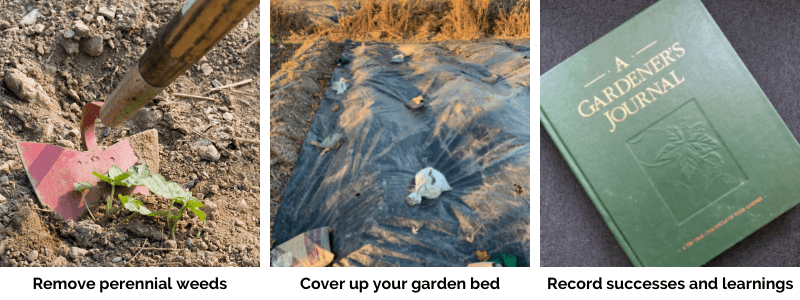
1. Eradicating Perennial Weeds
It is never too late to remove perennial weeds. Even in the late fall, these weeds are still actively building carbohydrate reserves in their roots to fuel their re-emergence in the spring.
- Fall is the easiest time for removal since the soil is often bare and workable. For gardeners dealing with clay soil (which is what we have in Toronto), digging is significantly easier in the fall when the soil is damp and easier to manage.
- Remove the tops and as much of the root system as possible to weaken the plant and prevent its survival through the winter.
- Common Perennial Weeds to Remove: Field bindweed, ground ivy (Creeping Charlie), burdock, curled dock, dandelions, purslane, Canada thistle, quackgrass, and nutsedge.
2. Never Leave Soil Uncovered
A foundational rule for vegetable gardening is to never leave your soil bare over winter. Uncovered soil can lead to compaction and nutrient leaching from the spring melt, providing an exposed environment for weed seeds to germinate. Covering your soil can also provide a home for beneficial insects over the winter.
- Cover Crop vs. Late-Season Mulch: While planting a cover crop is the preferred method, it must be done by September for successful germination. For October and November solutions, cover your garden beds with other organic matter.
- Alternative Mulching Materials:
- Plant Prunings and Other Organic Matter: Use seed-free straw, wood chips, cardboard, or disease-free plant cuttings from removed hot crops. These materials, laid atop the soil during the winter, provide organic matter that can be lightly blended into the soil two weeks before spring planting.
- Coarse Compost: In general, use coarse compost for soil improvement over the winter. Fine compost may leach away during the spring melt while coarse compost is more likely to stick around during periods of rain and snow melt.
- Tarping: Dark-coloured tarps, such as black landscape fabric or PVC tarps, cover the soil over winter and also offer the added benefits of suppressing weeds and warming the soil earlier in the spring, which helps to extend your short growing season.
- Caution for Perennials: If you have any hardy perennial vegetables in your garden, you must remove any nearby black plastic or landscape fabric before winter. These can pick up heat from the sun, even in winter, and lead to frequent thawing and refreezing of the soil on sunny days, which can damage any overwintering plants beneath or beside them.
Note: The one exception to this rule is when you have a pest infestation – see below for more information.
3. Overwintering Tender Perennials
For ambitiousurban agriculture growers, one of the best ways to get an early start on the season is by overwintering tender perennials, such as pepper plants, hibiscus, and rosemary. These plants are slow to mature in our short growing season. Bringing them indoors allows you to start the next season with a mature, established plant that produces fruit much sooner. See Overwintering Tender Perennial Vegetables for more information.
4. Dealing with Pests and Disease
If you experienced pest infestations or disease during the season, assume that the pests or their eggs will overwinter beneath the plants where they resided.
- Do not cover any infested areas with mulch. Leave that soil bare to expose the pests and eggs to the harsh Ontario winter weather.
- Give the affected area a hard raking after the first frost to further expose pests to the elements, significantly reducing their numbers for next season.
5. Documentation and Planning
Take the time now, while the season is fresh in your memory, to review your garden’s performance. Documenting your results is your best indicator of which plants will thrive and which will struggle next year. Do this review before you begin the planning and seed-ordering processes in the new year to guarantee a successful next vegetable gardening season.
Ready to Grow More?
Join our community of gardeners and start growing your own food in the city! From balcony boxes to backyard plots, community gardens, and urban farms, we’re dedicated to helping you succeed in vegetable gardening and urban agriculture.
- In the Greater Toronto Area (GTA)? Join Our Program at Downsview Park: Enroll in our full-season Grow Veggies program for hands-on learning and a share of the harvest.
- Get Monthly Tips: Sign up for our monthly Grow With Us newsletter to receive seasonal tips and our gardeners’ to-do lists.
- Follow Us: Find us on Instagram or Facebook to see what we’re growing at our teaching garden in Toronto.
 Homestead T.O.