
Optimizing your soil is the single most important step for successful vegetable gardening. Soil is the fundamental source of a plant’s water, oxygen, nutrients, temperature stability, and physical anchorage. Healthy soil is a living ecosystem that retains and converts nutrients into a usable form for your crops. It can even influence the flavour and pest resilience of your harvest. As gardeners, we do not just grow healthy plants; we grow healthy soil.
The Components of Healthy Soil
A truly healthy soil is defined by its texture and composition, both of which are critical for growing vegetables during the growing season.
Soil Texture (Particle Size)
Balanced soil requires a mix of particle sizes for optimal function.
- If all soil particles are large (like sand), water and nutrients wash right through, leaving little for the plants.
- If all soil particles are small (like clay), they condense and restrict air pockets, which can drown roots and limit oxygen access.
- A varied texture ensures the proper balance of porosity (for air, nutrient and water infiltration) and density (for temperature control, stability and nutrient retention).
Soil Composition
Balanced soil is composed of minerals and abundant organic matter.
- Minerals include sand, silt, and clay.
- Organic Matter is anything that was formerly living (e.g., compost, decaying roots).
- Organic matter is essential because it improves water retention, provides sustained nutrients, and feeds the crucial microorganisms that convert various nutrients into forms that are usable by plants.
How to Improve Soil for Clay-Heavy GTA Gardens
The core goal is to maintain a self-sustaining soil ecosystem. Here are some simple but important techniques for improving your garden soil’s texture and form, especially if you are working with the region’s common heavy clay soil:
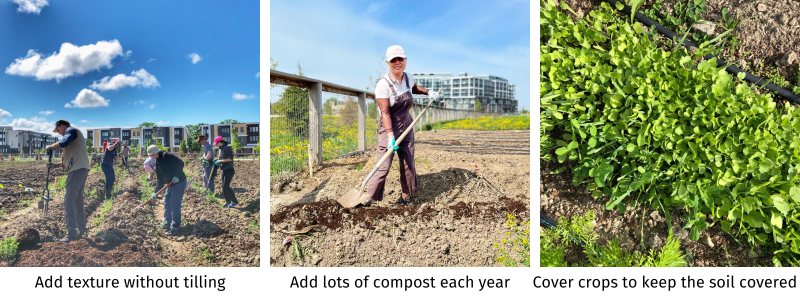
- Add Organic Matter Generously: Incorporating several inches of finished compost annually is the most effective way to improve soil structure and water-holding capacity. Other options include leaving plant roots to decompose in the ground, using straw or woodchip mulches and planting cover crops.
- Manage Clay Soil with Caution: If your soil contains a high percentage of clay, do not mix in sand directly unless you know the exact proportions. Mixing sand into heavy clay can inadvertently create a hard, concrete-like structure. Instead, focus on adding abundant organic material to naturally break up the clay.
- Never Walk on Garden Soil: Compaction squeezes out the vital air pockets that plant roots need to breathe (respire) and access oxygen. Establish permanent pathways to ensure you never step on your garden beds.
- Use Crop Rotation: Vary your vegetable crops each year based on their family, nutrient requirements, and root structure. This balances what plants remove from the soil and at what depth they remove it, leaving a healthier, more balanced mix behind.
- Keep the Soil Covered: Maintain continuous ground cover throughout the entire growing season. Use Succession Planting to replace harvested crops, and then use cover crops or mulch in the off-season. This reduces nutrient leaching, suppresses weeds, and maintains the beneficial soil ecosystem.
- Avoid Tilling When Possible: Generally, tilling (turning the soil) is only recommended for the first year or two when converting a new plot to a vegetable garden. Regular application of the principles above will build a healthy soil structure over time without disturbing the beneficial soil life. For a deeper look, check out Till vs. No-Till.
- Conduct Soil Testing: Before making large-scale amendments, consider testing your soil for texture, drainage, and nutrient composition to understand the existing strengths and weaknesses in your plot. Knowing your baseline is essential for effective remediation. For more information, see Soil Testing.
Ready to Grow More?
Join our community of gardeners and start growing your own food in the city! From balcony boxes to backyard plots, community gardens, and urban farms, we’re dedicated to helping you succeed in vegetable gardening and urban agriculture.
- In the Greater Toronto Area (GTA)? Join Our Program at Downsview Park: Enroll in our full-season Grow Veggies program for hands-on learning and a share of the harvest.
- Get Monthly Tips: Sign up for our monthly Grow With Us newsletter to receive seasonal tips and our gardeners’ to-do lists.
- Follow Us: Find us on Instagram or Facebook to see what we’re growing at our teaching garden in Toronto.
 Homestead T.O.