
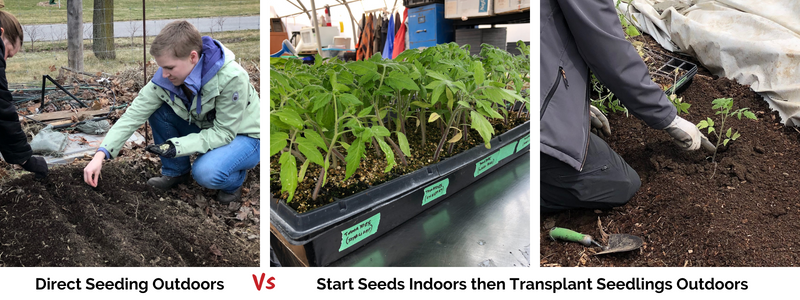
Choosing between starting seeds indoors and direct seeding outdoors is an important decision for vegetable gardening success. With our relatively short Ontario growing season, giving some crops a head-start indoors (seed starting) before moving them to the garden (transplanting) is often necessary. Direct seeding, on the other hand, involves sowing seeds right into the ground where they will mature. Learning the difference, and which method is best for which vegetable, helps you maximize your harvest and plan for multiple crops in one spot, a process covered in our guide on Succession Planting.
When to Choose Transplanting (Starting Seeds Indoors)
Transplanting is essential for plants that need a longer growth period than the season allows. As a general rule for gardening in Toronto and areas with a similar climate, start seeds indoors if:
- The vegetable has a long days-to-maturity (greater than 90 days for the final harvest).
- The plants are sensitive to the early spring cold or intense summer heat.
- The plants do not have a taproot, as taproots generally do not transplant well.
Essential Indoor Starts (Hot Crops)
Due to the short Ontario growing season, heat-loving vegetables (hot crops) like tomatoes, peppers, and eggplant must be started indoors to ensure a full harvest before the fall frost. For these long-cycle crops, starting them indoors approximately six to seven weeks before the last frost date is typical. Seeds generally require 42 or more days to grow to a viable size for transplanting. For more details, see our guide on Planting Hot Crops.
Cool Crops That Benefit from Transplanting
Slow-growing cool-weather crops, including broccoli, cabbage, cauliflower, and Brussels sprouts, are much more likely to succeed when transplanted. Starting them inside speeds up their growth, allowing them to mature in the narrow window between the last expected frost and the arrival of intense summer heat.
Optional Indoor Starts
Starting seeds indoors for fast-growing leafy greens and herbs is optional. Plants like lettuce, kale, chard, and most herbs will thrive when direct seeded, but starting them indoors allows for an earlier harvest, which is ideal for Succession Planting.
When to Choose Direct Seeding
Many vegetables are best sown directly into the garden where they will stay until harvest. These plants include root vegetables, which dislike root disturbance, and quick-maturing or hardy crops.
- Root Vegetables: Carrots, turnips, and radishes.
- Legumes: Beans and peas.
- Other Fast Growers: Spinach and corn.
Also, squash plants are distinctly hot crops but often grow fast enough that direct seeding is easiest, provided you wait until soil temperatures are sufficiently warm. You can also review our guide on Direct Seeding for detailed planting instructions.
For any crops not referred to above, you have your choice to either direct-seed them or start them indoors. It all depends on your available space indoors, your available growing supplies, and the speed with which you want to harvest your plants once they are outdoors.
Practical Tips for Toronto Gardening
Maximize your success in the urban environment by following these crucial steps:
- Hardening Off is Mandatory: Always acclimatize your seedlings before transplanting them outside. About one week before planting, begin placing the seedlings outdoors for increasing periods each day to toughen them up against stronger sunlight, wind, and temperature variations. This process, called “hardening off,” is critical for seedling survival.
- Soil Preparation: If direct seeding large or root vegetables, prepare the soil first. Aim to loosen the soil and incorporate organic matter to a depth of 12″ for root vegetables and 6″ for leafy plants. Ensure the top 2″ is loose and fine to prevent blockage of tender roots.
- Address Clay Soil: Toronto often has compacted clay soil, which can inhibit root growth. If direct seeding root crops, choose varieties suited for heavy soil, such as Chantenay carrots. For more information on improving your growing medium, read up on Soil Preparation.
- Inter-crop for Efficiency: To maximize space while you wait for slow-growing plants to mature, use a technique called inter-cropping. Seed small, low-profile, and fast-growing vegetables (such as radish or lettuce) between your larger plants. They will be harvested long before your larger plants mature and dominate the available space/nutrients. This increases your garden output and balances soil nutrients.
- Planting Depth: Plant seeds to a depth of two to four times the width of the seed. For small seeds like lettuce, plant deeper (four times the width). For large seeds like squash, plant shallower (two times the width).
Ready to plant? We have dedicated Mini Gardening Guides to walk you through both methods:
- Read our guide on Direct Seeding Vegetables for steps on preparing your garden bed and planting seeds correctly.
- Discover everything you need to know about setting up your lights and materials in Seed Starting.
Ready to Grow More?
Join our community of gardeners and start growing your own food in the city! From balcony boxes to backyard plots, community gardens, and urban farms, we’re dedicated to helping you succeed in vegetable gardening and urban agriculture.
- In the Greater Toronto Area (GTA)? Join Our Program at Downsview Park: Enroll in our full-season Grow Veggies program for hands-on learning and a share of the harvest.
- Get Monthly Tips: Sign up for our monthly Grow With Us newsletter to receive seasonal tips and our gardeners’ to-do lists.
- Follow Us: Find us on Instagram or Facebook to see what we’re growing at our teaching garden in Toronto.
 Homestead T.O.