
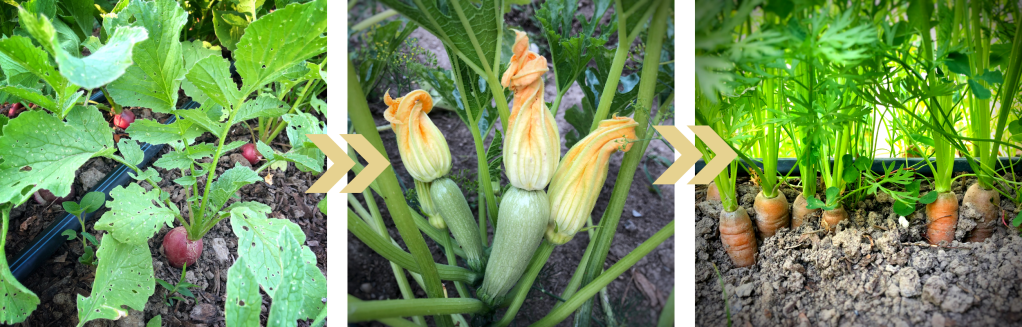
Among the most effective methods of maximizing your yields in a small urban plot is planned Succession Planting. This technique is essential for successful vegetable gardening in regions like the Greater Toronto Area (where we grow), where efficient use of a shorter growing season is key. It allows you to achieve multiple harvests from the same space, ensuring a continual, manageable supply of food rather than the common ‘famine-to-feast-to-famine’ cycle.
Key Succession Planting Strategies
Effective succession planting can be achieved by using one or more of these core techniques:
- Sequential Planting (Crop Rotation): Plant a second, and perhaps third, crop in the space immediately after harvesting the first. For example, plant a cool crop like radish or lettuce in April, followed by a hot crop such as tomatoes or beans in late-May, and then a quick-maturing spinach or carrot crop for a fall harvest, all within one growing season.
- Staggered Planting: Sow small quantities of the same crop (such as onions, bush beans, or lettuce) every one to two weeks, rather than planting the entire supply at once. This spaces out the harvest, ensuring a steady stream of fresh vegetables rather than a single massive haul. While you’re waiting to plant the later tranches, sneak in a quick planting of radish or mustard greens in that space to maximize your overall harvest.
- Intercropping: Plant fast-growing, small-profile crops (like radish or loose-leaf lettuce) immediately beside slower-growing, larger crops (such as tomatoes or peppers). The quick crops will be ready for harvest and removed before the larger plants fully size up and require all the available nutrients and space.
Tips for Succession Planting
Succession planting in the Ontario growing season requires a little bit of planning to overcome the challenges of a naturally shorter outdoor period.
Beat the Short Growing Season
To get the most out of your garden, you must factor in the full time required for a plant to mature, especially for fall crops:
- Mind the “Fall Factor”: The “days to maturity” on seed packets are measured in the spring. Crops planted for a fall harvest grow more slowly in September and October due to shorter daylight hours. Therefore, when planning your fall garden, add 1-2 weeks to the standard days to maturity listed on your seed packets before harvesting.
- Start Some Seeds Indoors: For early or late-season plantings, you can shorten the time a crop requires in the outdoor garden by starting the seeds indoors early and transplanting semi-mature seedlings into the garden when the time is right. This strategy shortens the outdoor days-to-maturity and is especially critical for late-summer planting in the GTA gardening climate. Learn more in our guide Starting Seeds Indoors vs Direct Seeding Outdoors.
Reliable Mid-Season Succession Crops
These vegetables are your go-to choices for reliable mid-season planting, offering a quick turnaround for a continuous supply:
- For Succession Planting in July: Beans, beets, carrots, okra, zucchini (1st week of July only), and green onions.
- For Succession Planting in August: Carrots, spinach, chard, beets, peas (1st week of August only), and green onions.
For an overview of starting your season early, review our guide on Seed Starting. To know which crops are suited for early planting, check out Planting Cool Crops and Planting Hot Crops. Planning for your later harvests is covered in Fall Crops to Plant.
Ready to Grow More?
Join our community of gardeners and start growing your own food in the city! From balcony boxes to backyard plots, community gardens, and urban farms, we’re dedicated to helping you succeed in vegetable gardening and urban agriculture.
- In the Greater Toronto Area (GTA)? Join Our Program at Downsview Park: Enroll in our full-season Grow Veggies program for hands-on learning and a share of the harvest.
- Get Monthly Tips: Sign up for our monthly Grow With Us newsletter to receive seasonal tips and our gardeners’ to-do lists.
- Follow Us: Find us on Instagram or Facebook to see what we’re growing at our teaching garden in Toronto.
 Homestead T.O.