
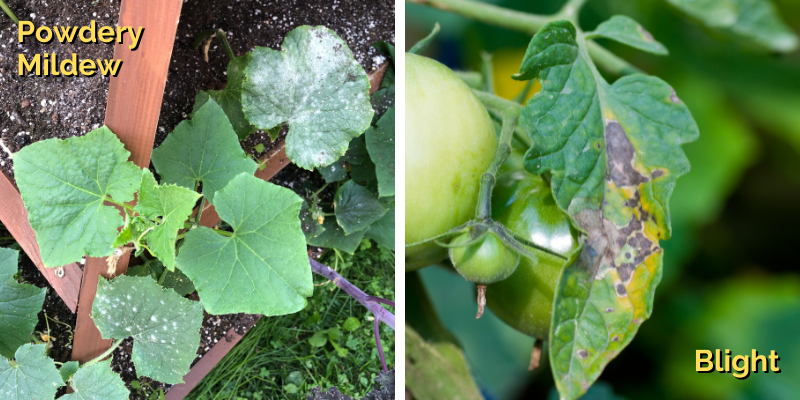
Powdery mildew and blight are common fungal diseases that can slow down or end your vegetable production. Understanding when these diseases typically arrive and how to manage them is key to maximizing a harvest, especially with our humid summers in the Toronto area.
Powdery Mildew: Identification and Prevention
Powdery mildew is a well-known fungal disease that often affects broadleaf plants, most notably zucchini, squash, and cucumber, typically appearing in August and September.
The Cause
- The fungus that causes powdery mildew re-emerges every summer as spores float into the area via air currents from down south.
- It thrives (and spreads) in semi-humid, room-temperature conditions – usually splashing up onto plant leaves from the ground during periods of rain or aerial watering..
- In late summer, Toronto’s moderate morning temperatures and morning dew create an ideal environment for the spread of powdery mildew.
Damage to Plants
- Diagnosis: The disease is easily identified by small, white, circular patches on leaves that connect and enlarge over time. Note: these patches are different from the sunscald that sometimes occurs on newly-transplanted plants.
- Impact: Initially, the damage is minimal, and existing fruits can still ripen. However, as the fungus spreads, it removes nutrients and limits photosynthesis, causing the plant to stop flowering and eventually die.
Practical Prevention and Treatment Tips
Prevention is the most effective approach against this fungus:
- Choose Resistant Varieties: When ordering vegetable seeds, select varieties that are known to be resistant to powdery mildew.
- Improve Airflow: In high-density urban garden settings, ensure your plants have good air circulation. Ensure proper spacing between plants and prune them regularly.
- Reduce Morning Dew: Where possible, plant your susceptible vegetables at the top of slopes or in raised beds to lessen the amount of morning dew on the leaves.
- Water the Soil, Not the Leaves: Never water the leaves of your plants, as this promotes disease.
- Mulch the Soil: As plants mature, begin to add wood chips or straw atop the soil beneath the plants to reduce the amount of splash-up from the soil when it rains.
Once the white spots appear, act immediately:
- Prune Early: Cut off the affected leaves as soon as you see the first signs. This removes the existing fungus and improves airflow, which can delay further spread.
- Water Spray: Spray a strong stream of water on affected areas to physically dislodge some fungal spores. The fungus enjoys light moisture but not a heavy spray of water. Important: Do this in the morning so the leaves have ample time to dry thoroughly during the day.
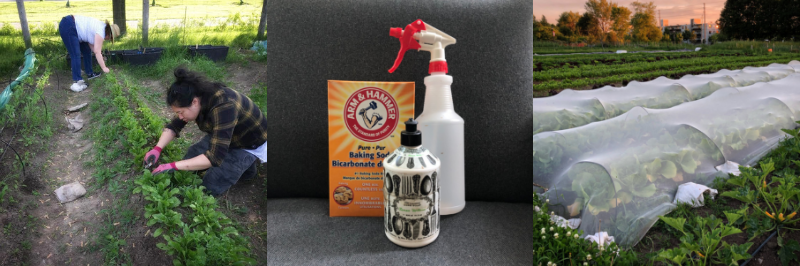
- Baking Soda Solution: Use a foliar spray made of 1 teaspoon of baking soda and a few drops of castile soap mixed into 1 litre of water. Apply this to all affected plant leaves using a spray bottle or a watering can with a sprinkler head. The solution raises the pH level on the leaf surface, creating an environment unsuitable for the fungus.
Managing Blight in Tomatoes and Potatoes
Blight is a significant issue for nightshade crops. There are several different types of blight:
- Early Blight: This type of blight usually occurs starting in July. It is easily identified by dark blotches on the leaves – often on tomato plants. Early blight is easily identified by looking closely at the blotches – they should contain concentric circles of light and dark brown. This blight removes nutrients from the plants but does not usually kill the plant or the harvest. It can usually be prevented by reducing watering (except on hot days) to occasional deep waterings, mulching beneath the plants as they mature, pruning plants to improve airflow and limit growth near the ground, and occasionally applying a foliar spray of 1 teaspoon of baking soda and a few drops of castile soap mixed into 1 litre of water. Any leaves that still get affected should be pruned away immediately, and clean your pruners after each cut.
- Late Blight: Late blight usually arrives in September and it is much more consequential than early blight. Late blight presents as dark splotches – look closely and you won’t see any concentric circles but, rather, you’ll see some fuzziness. The blotches will also appear on the systems and fruits of plants, not just the leaves. Aim to prevent it using the same techniques as with early blight. However, if you do get this disease despite your efforts, immediately cover each affected plant with a large garbage bag and then cut the plant at the base of the stem so that the entire plant stays inside the bag at all times (do not let the spores spread!). Then tie the bag up and dispose of it in the landfill and not in the compost. Do not handle infected plants in such a way where spores will fall to the ground or touch other plants as this is a difficult disease to get rid of. Once all affected plants have been removed, watch closely for late blight on neighbouring plants and only grow blight-resistant plants in those areas of the garden for the next 2-3 years.
The Practical Question: When To Stop Fighting Disease
In a typical vegetable gardening season, not every plant or disease is worth the effort of control. It is a practical choice to weigh the effort and efficacy of continued treatment.
- Assess the Value: If your remaining potential harvest is minimal or the crop is not particularly valuable to you, it is often simpler to let the disease win. Simply remove the affected plants and then grow something different in the same place for the remainder of the year.
- Example: If your cucumber plants have already produced several flushes of fruit and are then hit with powdery mildew in late summer, it may be better to harvest the final fruits, remove the affected plants, and thoroughly clean the garden section to prevent the fungus from overwintering and returning next year. Then, plant something from a different plant family so that you don’t lose any overall harvest.
For more on end-of-season decisions, see our guide: When To Fight Disease vs Let It Go.
Ready to Grow More?
Join our community of gardeners and start growing your own food in the city! From balcony boxes to backyard plots, community gardens, and urban farms, we’re dedicated to helping you succeed in vegetable gardening and urban agriculture.
- In the Greater Toronto Area (GTA)? Join Our Program at Downsview Park: Enroll in our full-season Grow Veggies program for hands-on learning and a share of the harvest.
- Get Monthly Tips: Sign up for our monthly Grow With Us newsletter to receive seasonal tips and our gardeners’ to-do lists.
- Follow Us: Find us on Instagram or Facebook to see what we’re growing at our teaching garden in Toronto.
 Homestead T.O.