
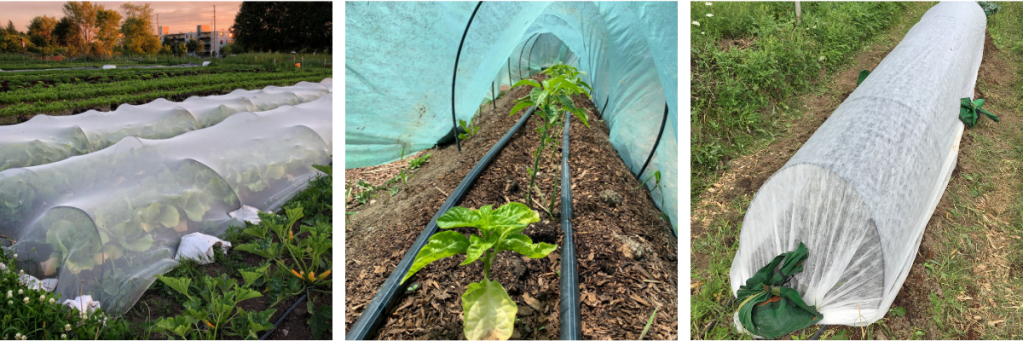
Row cover, often referred to as floating row cover, is an essential tool for gardening that provides a versatile, non-chemical solution for managing both weather and pests. For those growing vegetables in the Toronto area, row cover is invaluable for extending the short growing season and protecting crops from spring’s unpredictable temperatures.
Three Primary Benefits
Using row cover addresses some of the main environmental challenges faced by vegetable growers:
- Season Extension and Frost Protection: The material traps heat and moisture, creating a beneficial microclimate underneath. This is critical in early spring and late fall when the risk of frost remains, even after the official last frost date. By raising the temperature by a few degrees, row cover allows you to plant cool-season crops earlier and harvest later.
- Pest Management: Fine-mesh row cover acts as a physical barrier, effectively blocking many common garden pests from ever reaching your plants. This is a sustainable, organic method of pest control.
- Wind, Sunlight and Storm Protection: The fabric shields young, delicate seedlings from damaging strong winds, direct/strong sunlight and heavy rainfall.
Practical Tips for Row Cover Use
Integrate these practical strategies into your vegetable gardening plan to maximize the benefits of row cover:
- Pest Exclusion for Cool Crops: For your brassicas (like cabbage, broccoli, and kale), apply a fine-mesh row cover immediately after transplanting. This barrier is highly effective at preventing damaging insects such as cabbage moths, flea beetles, aphids, and earwigs. Since these crops do not require pollination (except where seed-saving), they can remain under row cover for the complete growing period.
- Frost Preparedness: Treat row cover as a gardener’s most useful tool for mitigating spring and fall temperature risks. In particular, keep it handy in March and April to protect newly planted seedlings from sudden cold snaps. For more on protecting plants from the cold, see our guide on Frost Tolerance in Plants.
- Securing the Edges: To create a successful barrier for both frost and pests, you must secure the edges of the fabric tightly. Use soil, sandbags, wooden planks, or rocks to weigh down the entire perimeter, ensuring no gaps remain for cold air or insects to slip through.
- Hoops vs. Floating: You can lay the cover directly over plants (floating) or suspend it over wire or PVC hoops (low tunnels). Hoops are recommended for larger plants or when maximum insulation is needed, as they prevent the fabric from touching the foliage and creating a cold spot during a frost.
- The Pollination Problem: If you are growing crops that require insect pollination (squash, cucumbers, peppers, tomatoes), the row cover must be removed once the plants begin to flower. Alternatively, you can hand-pollinate the flowers while the cover remains in place. For more detail, check out our guide on Plant Pollination.
Row cover is the perfect tool for getting a head start on the short growing season and ensuring a reliable harvest in the often-challenging climate of the GTA.
Ready to Grow More?
Join our community of gardeners and start growing your own food in the city! From balcony boxes to backyard plots, community gardens, and urban farms, we’re dedicated to helping you succeed in vegetable gardening and urban agriculture.
- In the Greater Toronto Area (GTA)? Join Our Program at Downsview Park: Enroll in our full-season Grow Veggies program for hands-on learning and a share of the harvest.
- Get Monthly Tips: Sign up for our monthly Grow With Us newsletter to receive seasonal tips and our gardeners’ to-do lists.
- Follow Us: Find us on Instagram or Facebook to see what we’re growing at our teaching garden in Toronto.
 Homestead T.O.