
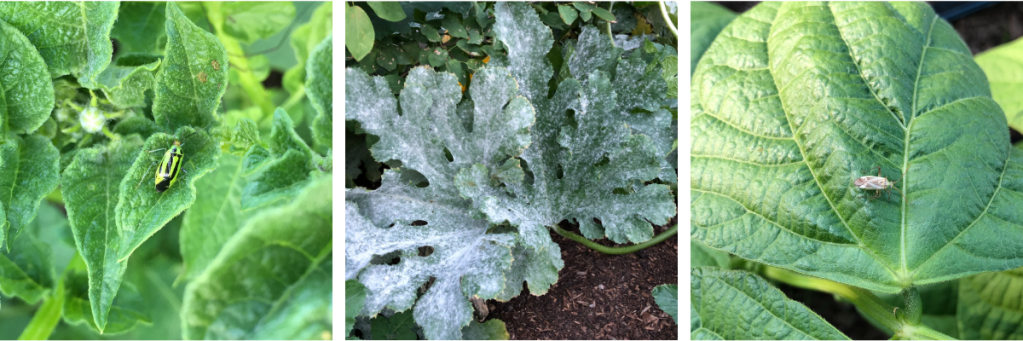
Late summer marks a challenging period for vegetable gardening, depending on where you live. As the Ontario growing season transitions, plants struggle with wildly fluctuating temperatures, dropping sunlight levels, cool nights, and high humidity. This stress makes them highly susceptible to issues like fungal disease and common pests such as cucumber beetles, squash bugs, and flea beetles.
Faced with an infestation, your instinct might be to immediately fight for every last fruit. However, before deploying your entire pest control arsenal, stop and perform a critical cost-benefit analysis.
The Cost-Benefit Analysis: Treat or Remove?
You may be able to win the battle against plant diseases using physical techniques like pruning, spraying, scraping, and even vacuuming. However, for late-stage, stressed plants, the effort may not be worth the minimal remaining harvest. In these cases, it is often better to cut your losses and strategically prepare for the fall.
When to Surrender and Reset
If your remaining harvest is minimal or the crop is past its prime, it is often easier to let the pests win and remove the affected plants.
- Assess Remaining Value: For crops like zucchini or cucumbers that have already produced several successful flushes, a late-season infestation of cucumber beetles or powdery mildew is a signal to end the harvest early.
- Break the Cycle: Removing and bagging all affected plant matter (and disposing of it outside of your compost) is critical. This physically removes the disease or pests, preventing them from overwintering in your soil and returning next year to feast on the same plant family.
For more on dealing with common garden invaders, consult our guide on Pest Management.
Maximizing Your Season: The Fall Harvest Strategy
Instead of struggling for a few more fruits, a mid-season removal frees up valuable garden space for succession planting. This allows you to start a new, healthy crop and maximize your total annual harvest before the growing season ends.
- Prioritize Crop Rotation: When replacing the old crop, you must plant a vegetable from a different plant family in that spot. This is a fundamental rule of organic gardening and it maintains soil nutrient balance while disrupting the life cycles of any family-specific pests and diseases.
- Focus on Cool Crops: The key to a successful fall harvest in climates such ours in Toronto is succession-planting fast-growing, frost-tolerant cool crops that thrive in the cooler temperatures of autumn. Focus on quick turnaround vegetables like radishes, loose-leaf lettuce, or spinach.
- There is no shame in pulling everything early and forsaking a small, compromised harvest IF it means getting a more fulsome, clean harvest from the next crop! For ideas on new crops, check out our guide on Fall Crops to Plant.
Ready to Grow More?
Join our community of gardeners and start growing your own food in the city! From balcony boxes to backyard plots, community gardens, and urban farms, we’re dedicated to helping you succeed in vegetable gardening and urban agriculture.
- In the Greater Toronto Area (GTA)? Join Our Program at Downsview Park: Enroll in our full-season Grow Veggies program for hands-on learning and a share of the harvest.
- Get Monthly Tips: Sign up for our monthly Grow With Us newsletter to receive seasonal tips and our gardeners’ to-do lists.
- Follow Us: Find us on Instagram or Facebook to see what we’re growing at our teaching garden in Toronto.
 Homestead T.O.